Editor’s note: We’re glad to share this guest piece from Michael Altherr, a fellow Truchas Chapter angler. It follows a day spent setting aside old habits to work on swinging wet flies and throwing streamers on an unfamiliar stretch of northern New Mexico water. The voice and the fishing are the author’s own. We hope it nudges you to try something new on your next day out.
I really enjoy dry::dropper fishing and I find it especially rewarding, this time of year, when a big brown will dash out from under a bank to slam a hopper. Sometimes, for added excitement, another brown will join the party and simultaneously hit the dropper. I also enjoy watching fish either enthusiastically hit a single dry, when I’ve figured out the right formula, or sip it during a hatch. Furthermore, I’m not at all opposed to dropping a pair of nymphs below an indicator (fly fishers don’t use bobbers) to stimulate a little action on a slow day.
Sometimes these predilections get in the way of me expanding my technical range and I have to force myself to work on techniques that I don’t often employ. So it was yesterday, when I decided to spend the day working on two techniques that I seldom or rarely use: swinging wets and throwing streamers. I searched the web for a little refresher on swinging wets and found some useful content on the Orvis Learning Center, and a nice Lance Egan video to prep for my day. Subsequently, I tied up a couple of Chouinard flymphs as per one of his contributions to the book ‘Pheasant Tail Simplicity,’ and I tied a couple of bead-head weighted pheasant tail nymphs (PTN). My intention was to only bring these flies and some streamers to limit me to work on the previously called out techniques. Of course I had to add to my day-pack a couple of pre-tied dry::dropper rigs, a box of drys, a box of weighted and a box of unweighted nymphs, as well as a box of miscellany which includes some worms, eggs and etc., just in case. What if? Call it a crutch if you will.
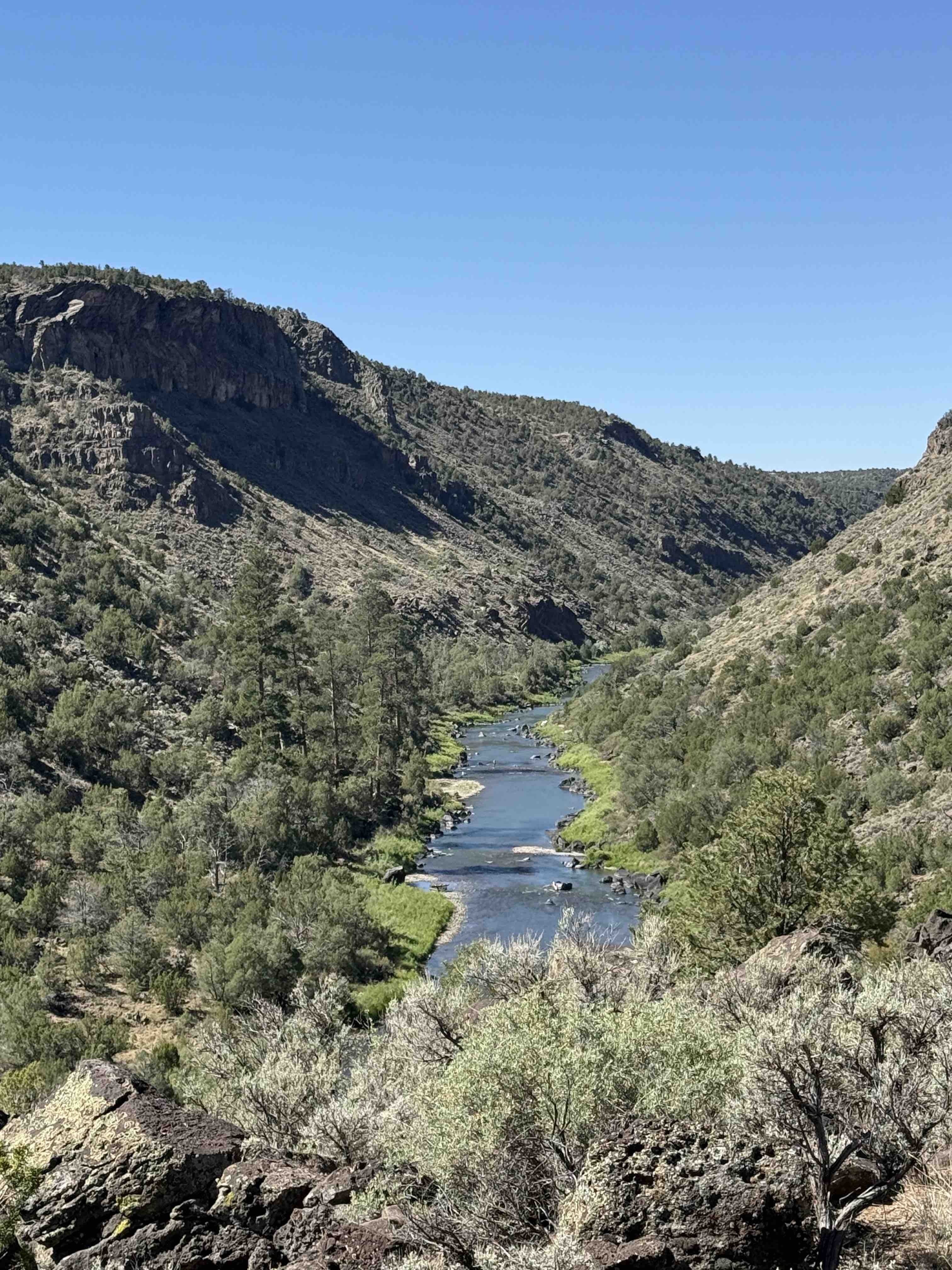
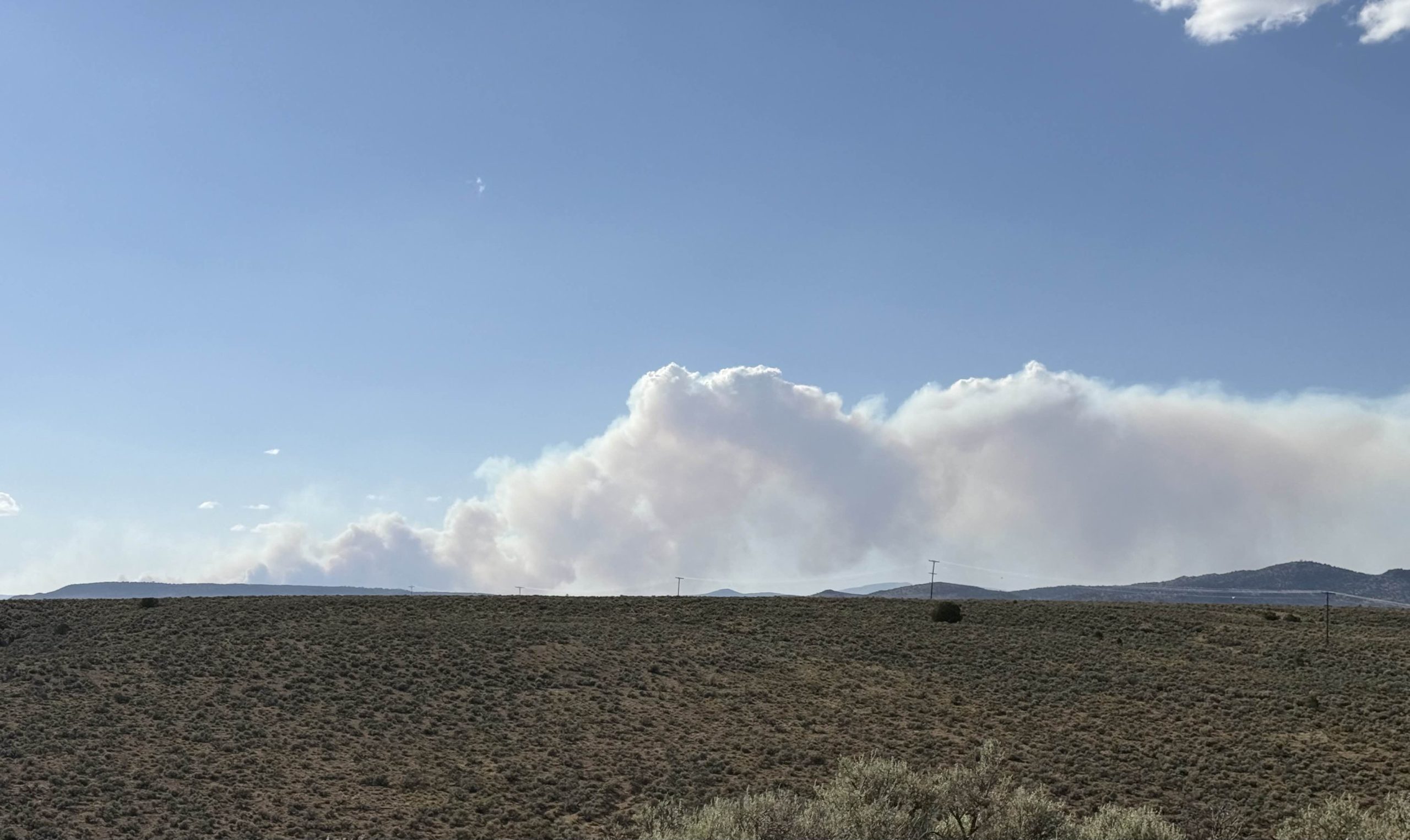
To make things even more interesting I decided to visit a piece of water that I had never fished before. There were two reasons for this: 1) curiosity – I always like to increase complexity with multiple variables, and 2) all the fires in the area, a predictable outcome resulting from our poor winter snow, are limiting access to some of my favorite places to fish. As it turned out, it was a good place to fish as all the classic types of fishable water could be found along a one-half mile stretch of river: riffles, runs, pockets and pools. Clearly, having committed myself to swinging wet flies and fishing streamers, I rigged up tying a size 16 flymph on a tag with a bead head PTN on point to 5X tippet, and made my first casts ‘upstream’ into an inviting pocket. So much for swinging my flies downstream on the drift. On my third cast, I hooked the biggest fish of the day, a feisty rainbow, and it broke off the point fly in the current. That was fun, but not a particularly auspicious start. I tied another PTN on point and promptly snagged it on a branch at the bottom of the pool. I spoiled the pool by wading in and recovering my nymph. After all, I didn’t have an inexhaustible supply and things were not going well. I left that pool and got back on task. I swung my rig down a deep thin run past a couple of eddies and managed to land a 4 inch brown trout. It had taken a liking to the flymph.
Okay, things were looking up, or were they? I wet waded downstream along a rocky shoal flanked by two strong current streams. The left current stream was bounded by two soft seams with some large rocks providing structure. The right stream was bounded by the shoal that I was on and a riffle. It was a textbook location for swinging wets. I had targets on both my left and my right. After a couple of casts, I hooked up with something as the rig swung through the riffles on the right toward the heavier flow. It didn’t feel particularly big but the fish got into the faster current downstream, and things got a little more entertaining. As I directed the fish to the softer water of the shoal where I was standing, I saw a flash of silver. I was hoping for a rainbow but it turned out to be a relatively large eight inch flathead chub, essentially a big minnow, with the PTN in its lip. I caught another small brown on the flymph as my rig swung from the faster current on the left to the soft seam. Swinging wets was bringing me fish but nothing to write home about.
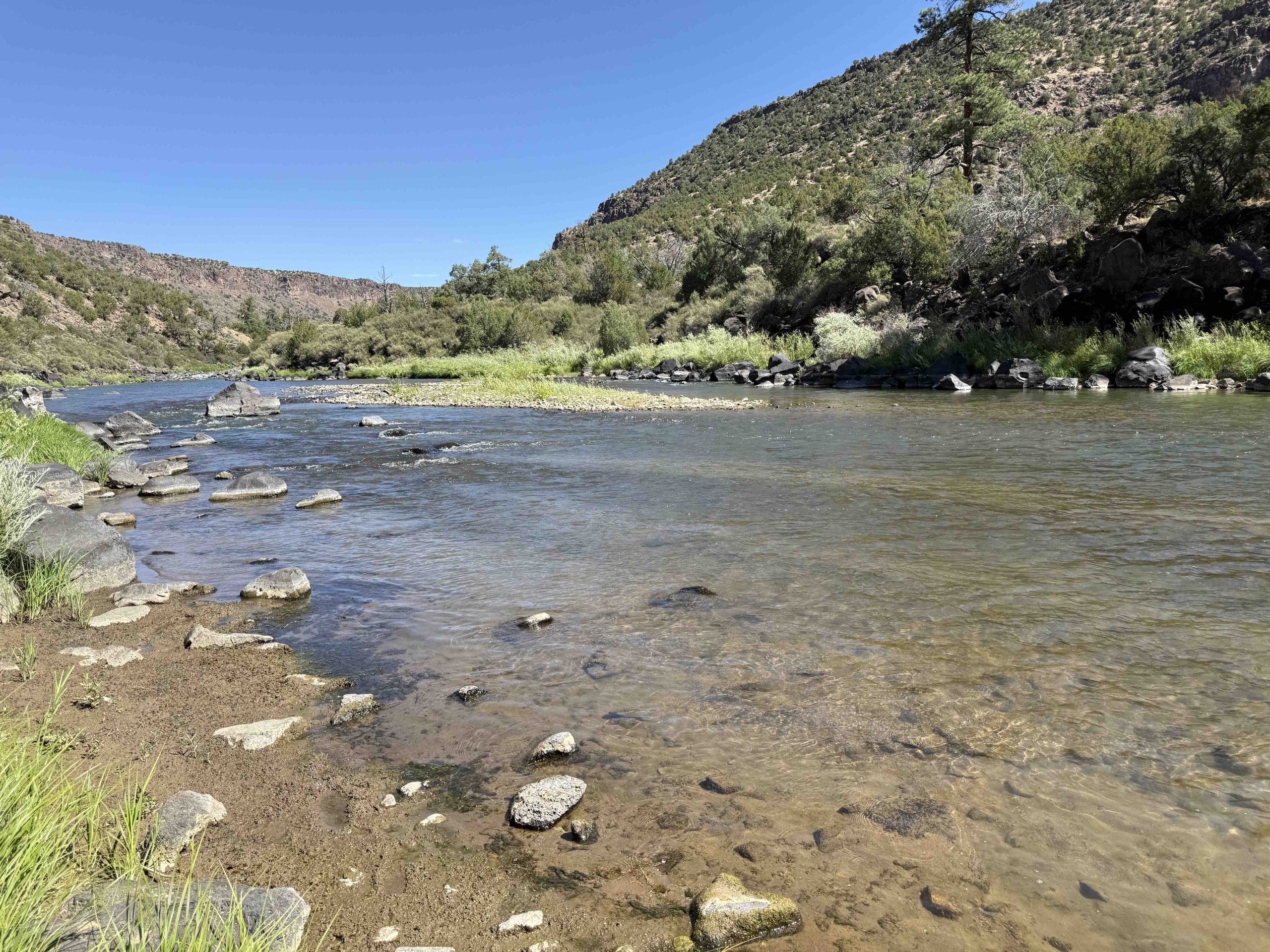
The shoal I was on petered out and the two heavy current streams became one large deep flow. I walked back up the shoal and crossed over to the riffle. As I ‘stealthily’ walked downstream in the riffle back to the point of convergence, I continued to swing my flies across it. I landed another chub on the PTN. When I again reached the point where my main current merged and was flanked by the riffle, I made several quartering casts of different lengths downstream into the main flow and I tracked the flies as they swung up toward the riffles. After a couple of casts, Bam – fish on! This time it felt more interesting. At first, the fish swam right at me and I was sure it was going to throw the hook. I was barely able to keep the line tight by stripping. Then, the fish vectored off for the main current. I’m fishing 5X tippet, I already lost one fish in the current, and I was now playing another fish and fighting the current at the same time. I felt sure the tippet would break. With a pile of slack line at my feet, I kept tension on the fish while allowing it to run until the slack was gone and I got it on the reel. I was able to direct it out of the heavy flow onto the riffle and bring the fish to net. It was a nice 14 inch brownie that had taken the flymph. Not a trophy, but a pretty fish. By the end of the day I had netted at least six browns around this size, a couple of slightly smaller rainbows, another chub, and a bunch of smaller browns. This all resulted from swinging flies both in the riffles, past structure, and along slower seams off the main flow of the current. Approximately equal numbers were hooked with the flymph and PTN. It almost started to get silly when another fish hit one of the flies drifting downstream, after I just released a fish while I was untangling my fly line from the mess that fish had made in the net. I dropped my net, attached to a tether, in the water and cradled the rod between my legs as I tried to hand line the second fish in, but it got off. In another instance, I had two larger browns hooked at the same time but I only managed to get one to net.
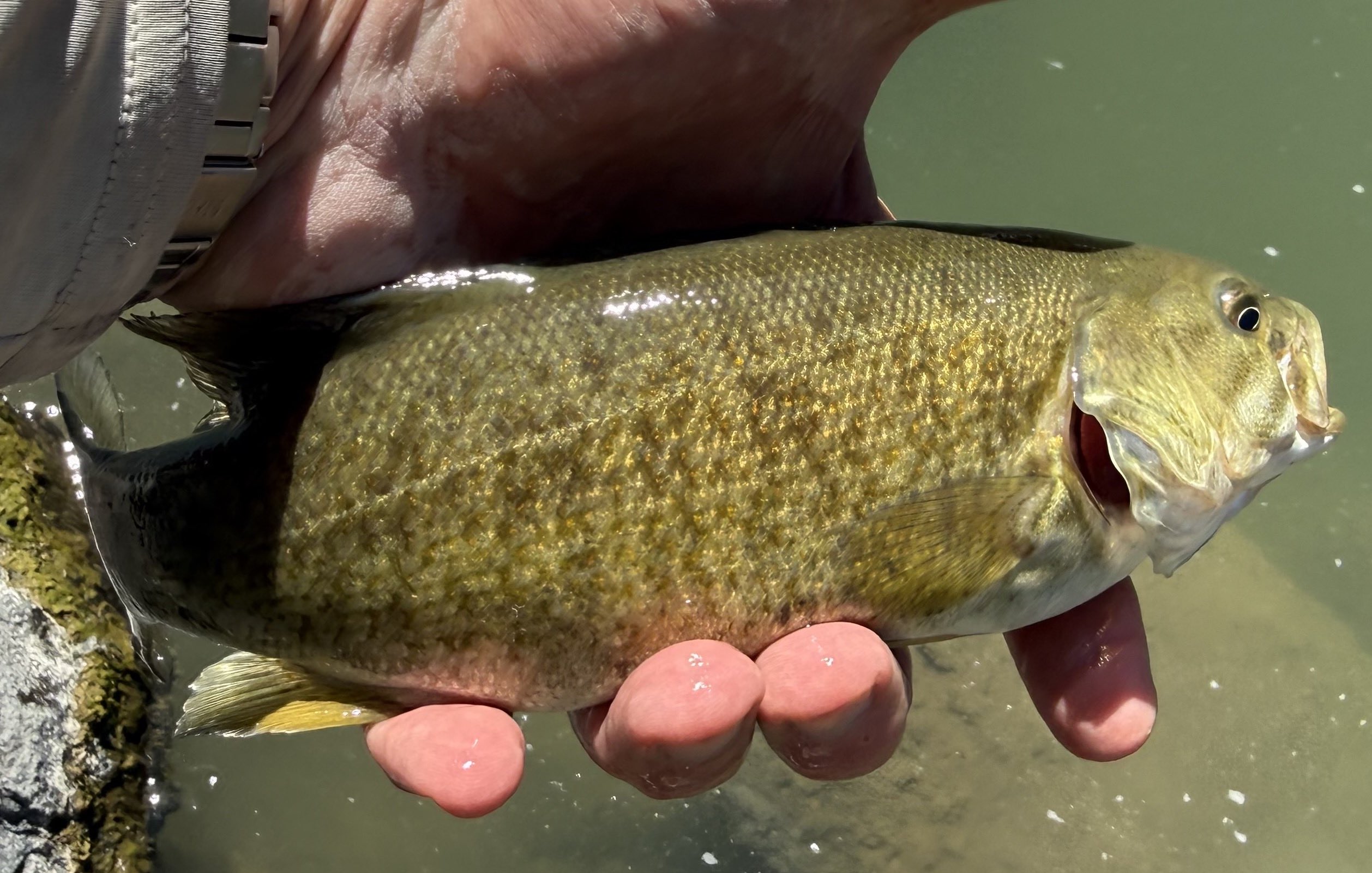
As I neared the end of the segment of the river that I had intended to fish, I happened on a beautiful pool that plunged into a short steep chute terminating in a much softer run. I caught three of the larger browns on the PTN just off the foam line flowing through this pool. Now, convinced that I had a reasonable handle on this wet-fly swing thing, and wanting to see if I could rouse something a little bigger, I changed over to a streamer rig. I had pre-rigged a medium sink rate Versa-leader made by Rio to a 12 inch piece of 0X tippet that terminated at a small swivel, to that I added a 24 inch piece of 2X tippet. I tried a couple of different streamers making casts through the pool that I had just fished, with no results to show for it. I wasn’t sure that I was using a pattern of interest to the lunkers that I knew were there, or perhaps, I wasn’t getting the streamers deep enough. Then I had an epiphany, after almost stepping on a crayfish while wading in the shallows, I tied on a heavy streamer that resembled a crayfish. I also decided to give the pool where I was fishing a rest, and I made my way around the chute to fish the slower water below. I struggled keeping the crayfish streamer off the bottom as I was transiently snagging during my retrieve. I thought that I had snagged again and that I was pulling in a branch, when it decided to pull back. To my surprise, attached to the crayfish streamer was a small-mouth bass. That was the last fish of the day that I caught. I tried a few other streamer patterns that mimicked the small trout and other fish that I was seeing throughout the day. I just could not entice those bigger fish that I am sure are in there but were not interested in my offerings. Nonetheless, sated and needing to be home before dark I called it a day.
On reflection, I’m not sure why I never focused on swinging wet flies. It is obviously a fun and productive method. The wind was blowing upstream, making downstream casts a bit of a challenge. The wind would have been useful for throwing casts upstream, and I surprised myself that I did not revert to my old form, put on a dry::dropper and fall into my usual routine. I did not on this occasion, and I am glad to have played with the swing. Once the rig was in the water, the swing really seems to stimulate the bite especially at the transition points from deep to shallow or slow to fast and vice versa. “It don’t mean a thing, if it ain’t got that swing.”
While I keep throwing streamers, occasionally, I keep hoping to see that big fish hit that big bait. However, I have to say that, to date, as far back as I can remember (and that time is getting shorter all the time) my biggest fish have all come to hoppers. Although, catching that smallie on a streamer was an entertaining surprise. I may just need to try streamers in a different place, get a little instruction, or both.
Happy Trails