Editor’s Note: This article continues Michael Altherr’s pursuit of the Western Native Trout Challenge and revisits the upper Rio Cebolla more than a year after his first trip. His firsthand account offers a candid look at both the difficulties of restoring Rio Grande cutthroat trout and the encouraging habitat improvements underway through Rio Grande Return’s work.
It has been over a year since I launched my bid to complete the Western Native Trout Challenge (WNTC). For those of you unaware of the Challenge, I refer you to an earlier blog post that describes it in some detail. In short, the WNTC requires catching 18 distinct species of trout in their historical waters in 12 western states. The Challenge is broken down into three levels, requiring six different species to be caught in four different states per level. I completed Level I in November of 2025.
In New Mexico, we have two native trout species: the Rio Grande cutthroat trout and the Gila trout. The WNTC coordinates with each state’s DGF to identify streams that constitute the historical range of the native species resident in that state where it is unlikely to be hybridizing with non-natives like rainbow trout. The NMDGF (now the Department of Wildlife) has identified a number of locations that are supposed to contain non-hybridizing natives and made those locations available to the WNTC. The WNTC has posted the locales supposedly holding NM natives on its website. Based on this information, I began my challenge in June of 2025 on the Rio Cebolla in the Jemez District of the Santa Fe National Forest.
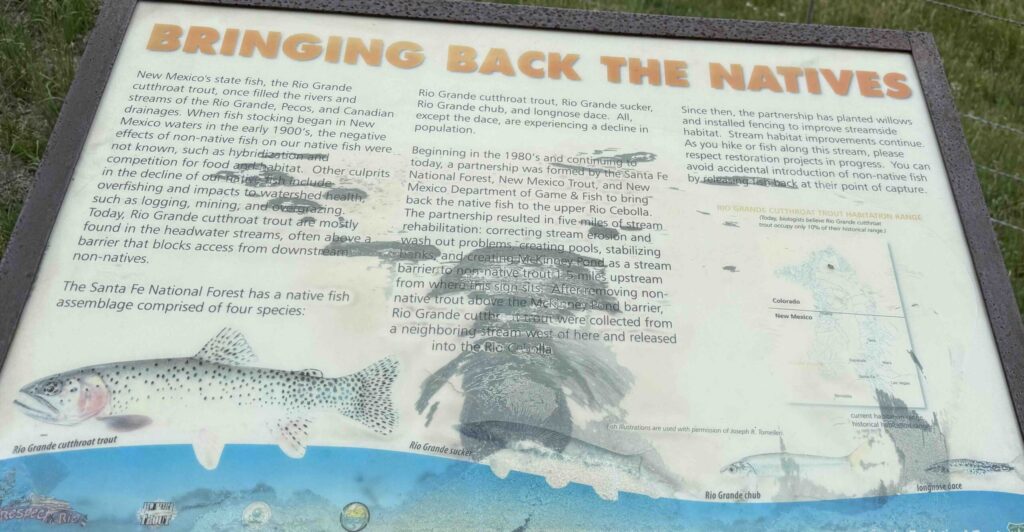
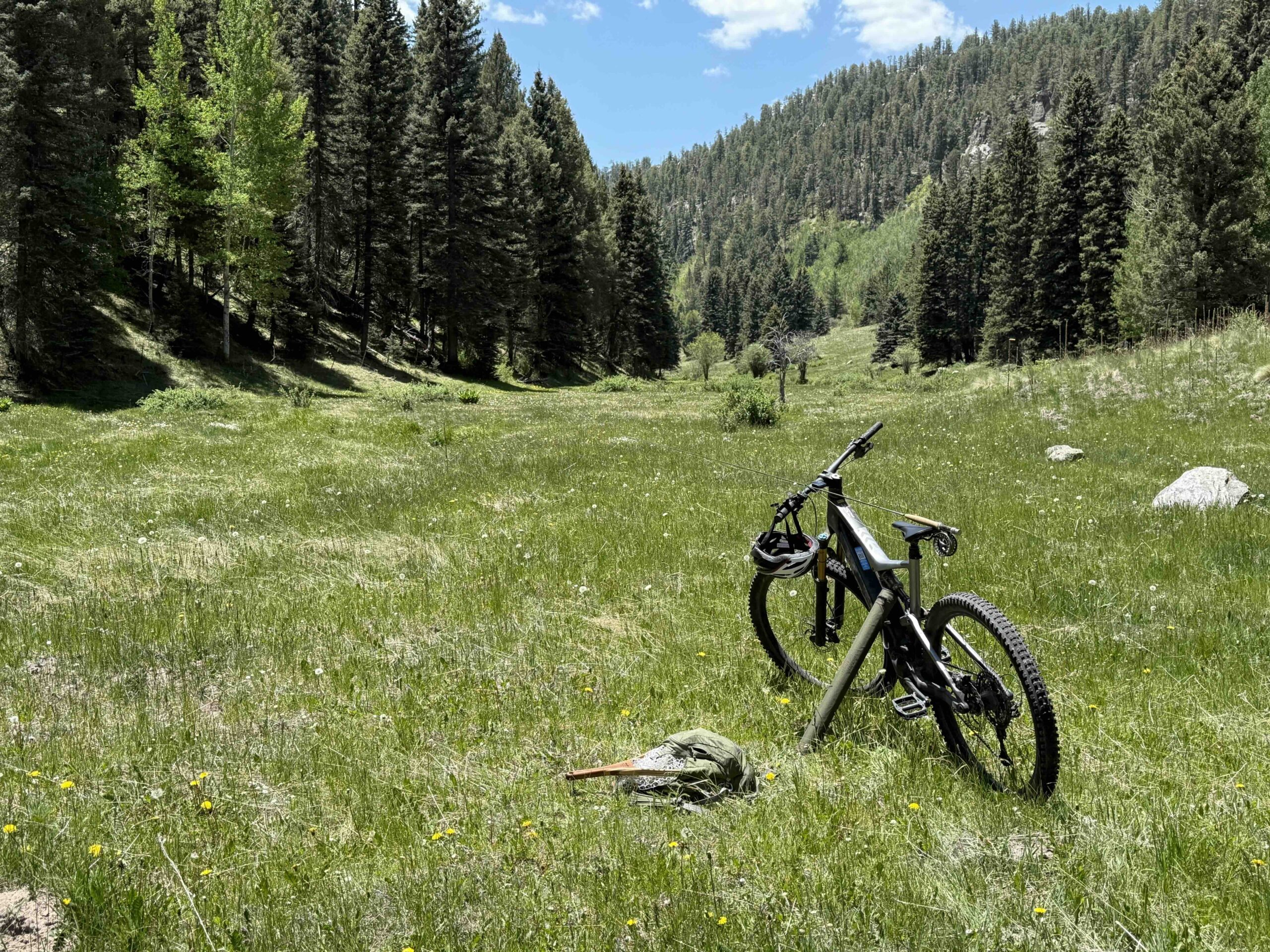
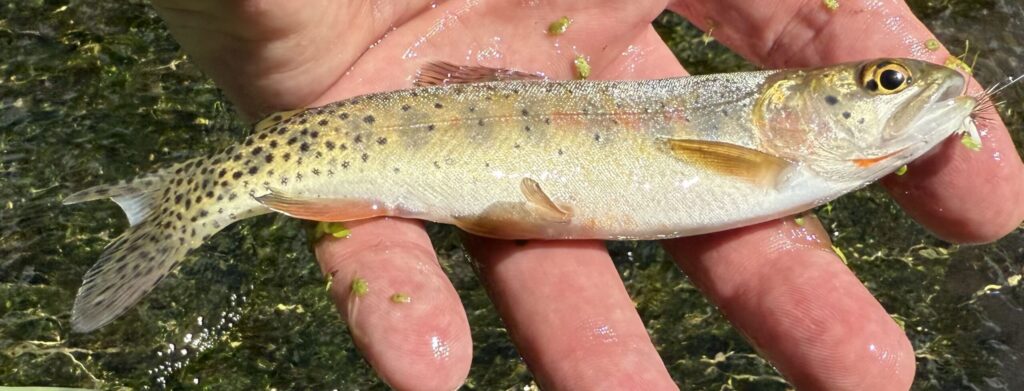
A short distance from the trailhead, I happened upon an informational kiosk explaining efforts to restore a viable Rio Grande cutthroat fishery to the upper Rio Cebolla watershed, and my hopes for netting my first species in the Challenge were buoyed. I rode my mountain bike up into the upper watershed to cover as much ground as possible. The upper Rio Cebolla is a small stream, and even in June of 2025, it was running thin and clear. On my first outing, I caught about half a dozen brown trout and never saw a cutthroat. Disappointed but undeterred, I returned a week later and managed to put a cutty in the net, but not until I had landed another dozen browns. While I have no objection to catching a brown, in this stream they are an invasive pest species outcompeting the hoped-for reintroduction of native fish in this watershed. Simply removing non-natives, reintroducing natives into the watershed, posting a sign, and hoping for the best is obviously not a successful management strategy.
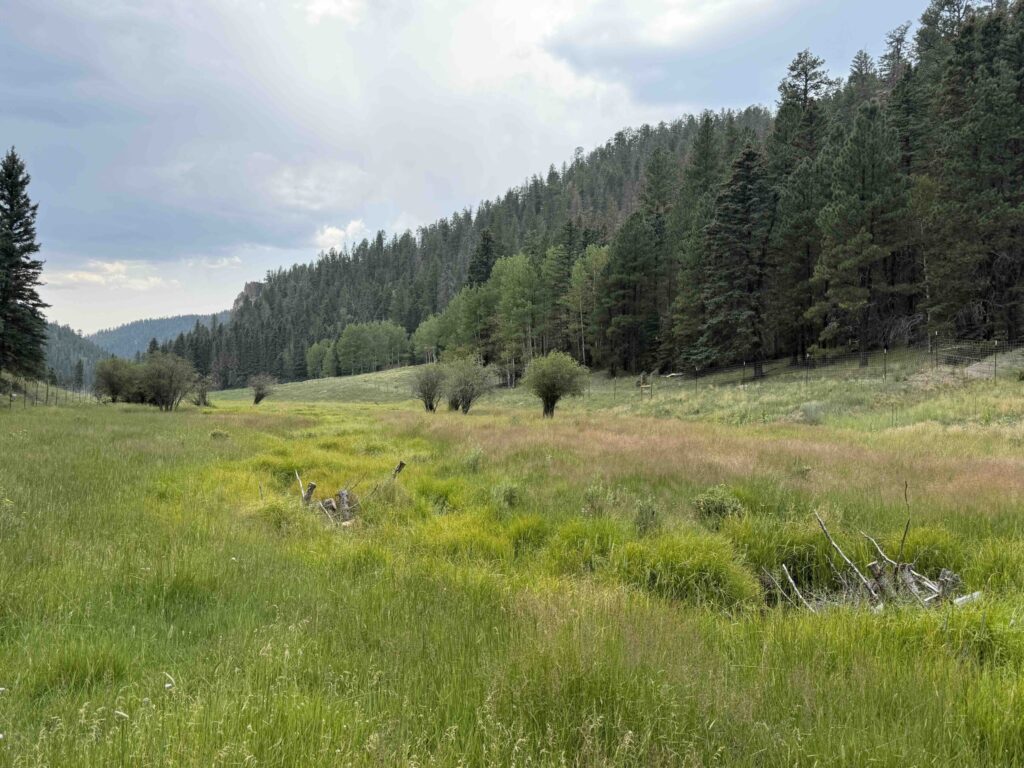
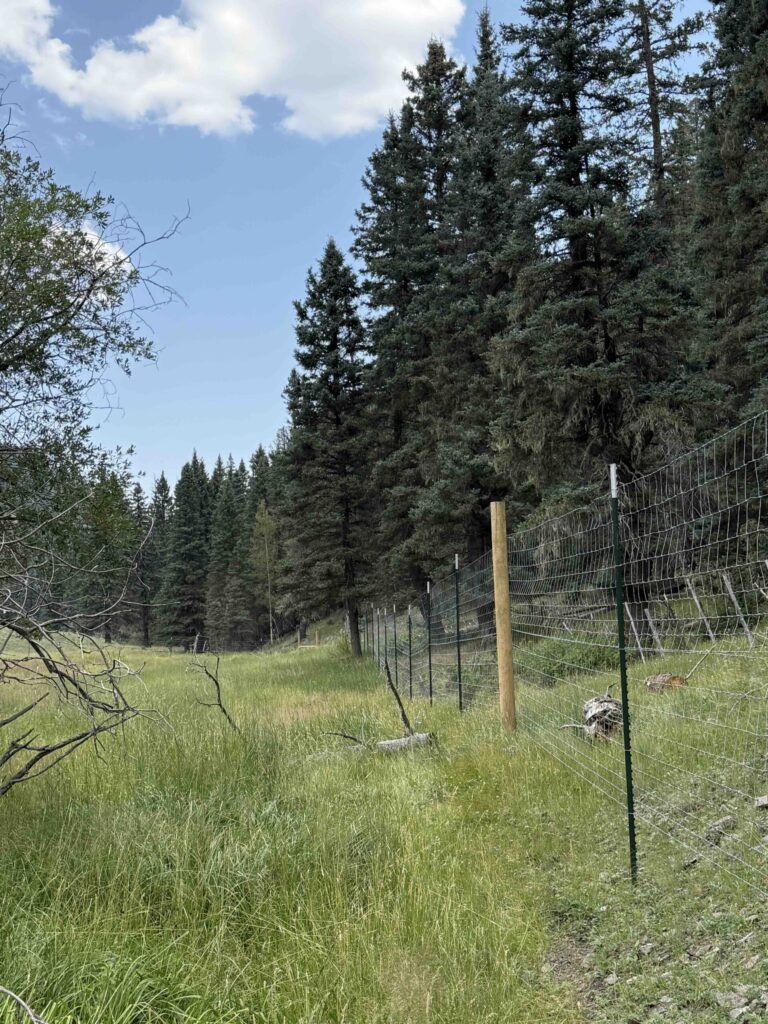
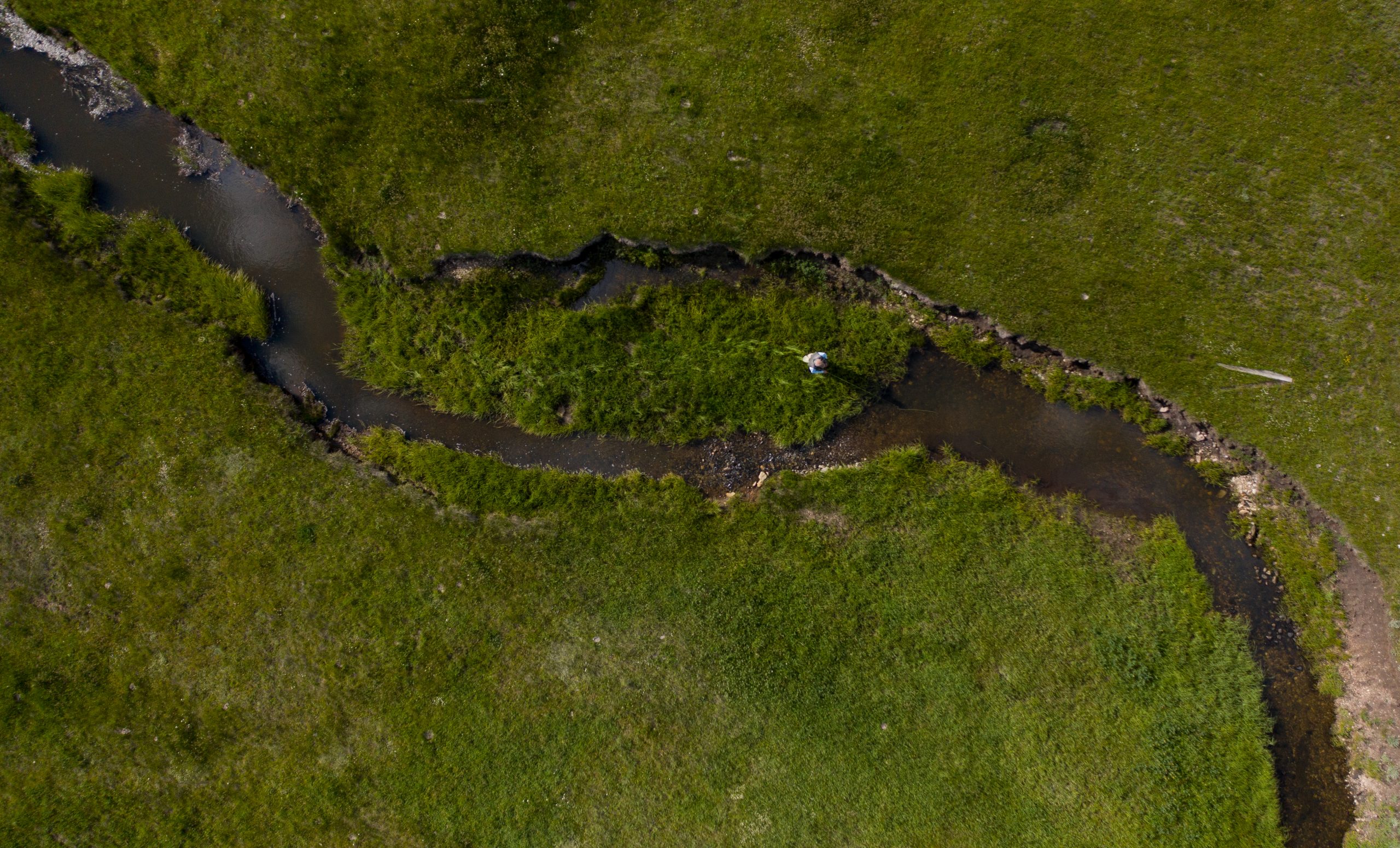
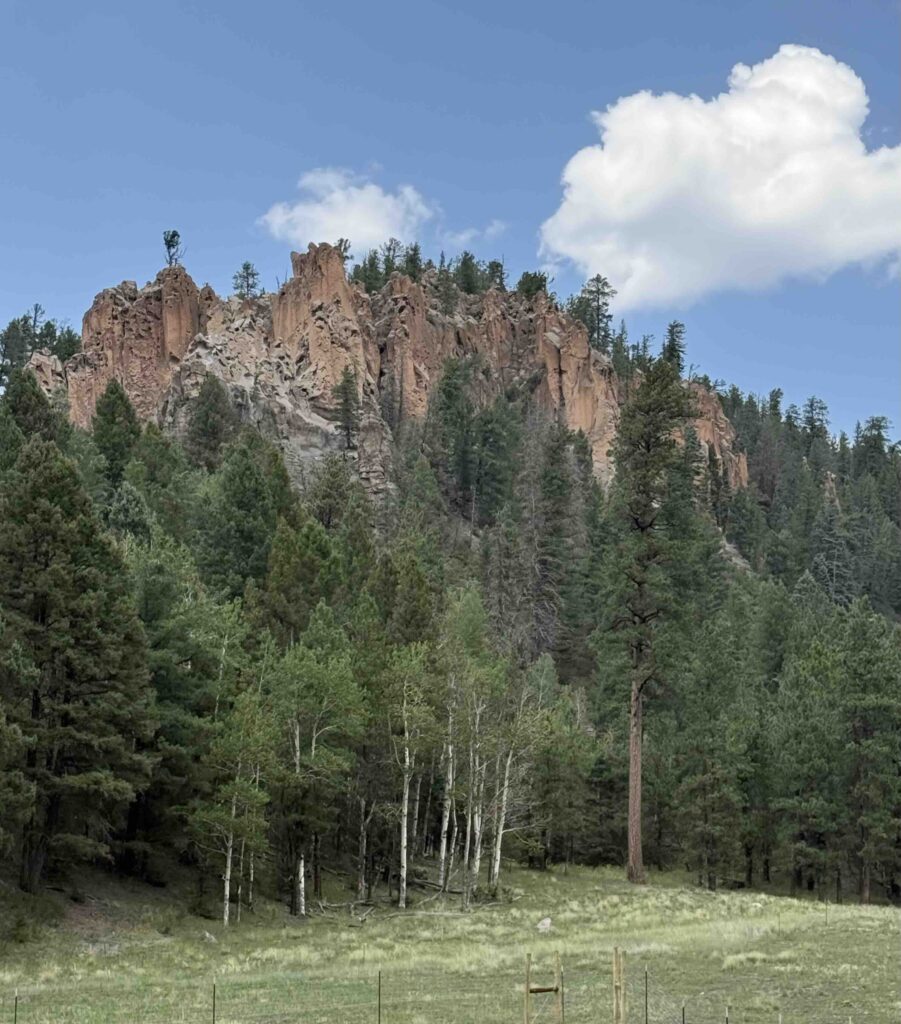
In August 2026, I returned to the upper Rio Cebolla and was pleased to run into a group from Rio Grande Return (RGR) performing restoration work in the watershed. I spoke at length with one of the project managers and found out that they have been working in the area for approximately three years. Since I last visited, RGR has constructed a large number of beaver dam analogs along several miles of stream. Furthermore, they have replanted willows and built extensive exclosures to keep elk and cattle out of the recovering riparian landscape. I made my way into one of the exclosures and noted how effective their efforts have been at de-channelizing the stream. The water flowing through the stream was shallow, clear, and remarkably cool. I did not see any fish, but I did observe a couple of snakes, and the air was full of adult caddis. So, conditions appear to be improving for fish. Removing the brown trout, necessary to allow Rio Grande cutthroat to thrive, will require further effort. While I am hopeful that the Rio Cebolla watershed is improving, it should not currently be considered viable habitat for Rio Grande cutthroat. Individuals interested in catching native Rio Grande cutthroat would do better elsewhere. That said, it is a beautiful place to visit, and I’m looking forward to another visit next spring, when fishing should be improved.
– Michael Altherr, Ph.D.