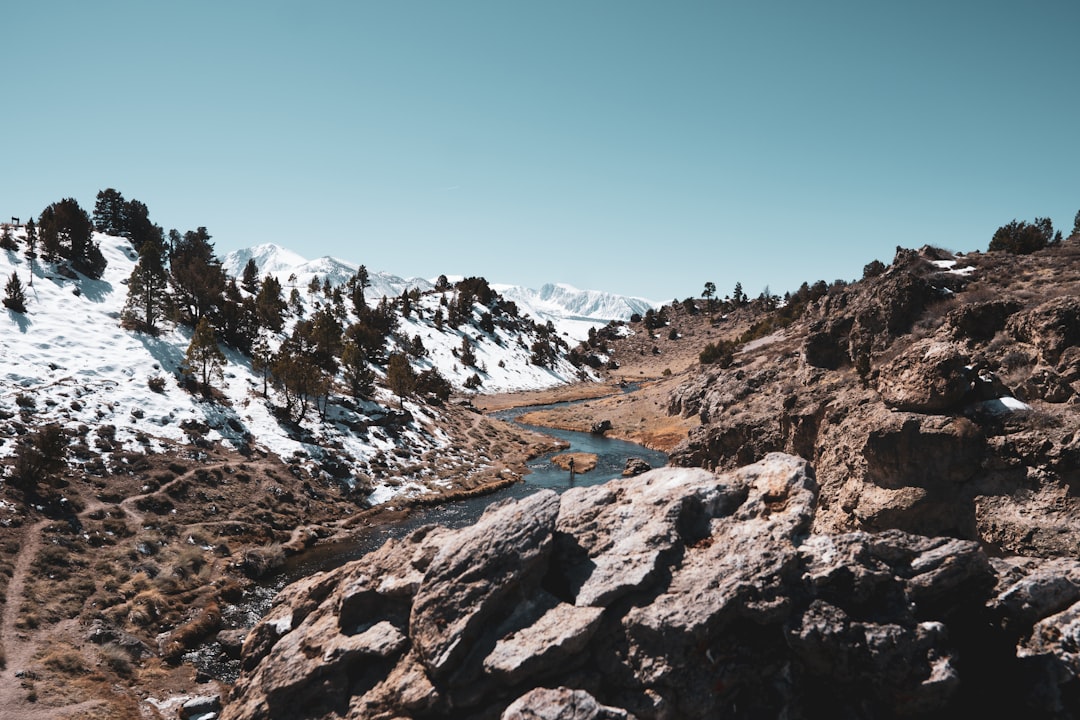
The Pecos Wilderness covers roughly 223,000 acres of the southern Sangre de Cristo range, and inside it run some of the finest small-stream trout waters in the Southwest. For our chapter and the anglers we serve across northern New Mexico, the upper Pecos is home water: a teaching water, a refuge water, and a window into what a healthy native-trout watershed still looks like. This field guide is a starting point. Where to go, what to fish, what the regulations require, and how to leave a place better than you found it.
Why the upper Pecos matters
The Pecos River is federally designated Wild and Scenic for roughly 20 miles inside the wilderness, and it carries three trout species. The lower stretches near Cowles hold stocked rainbows. Wild, stream-bred brown trout range throughout the canyon, with fish to 18 inches reported from the deeper pools. And in the cold tributaries above Pecos Falls, you can still find Rio Grande Cutthroat Trout, the only trout native to this watershed and the state fish of New Mexico.
That last point is what brings most of our members up here. Rio Grande Cutthroat are a priority species for Trout Unlimited nationally and for our chapter locally. The Pecos headwaters are one of the few places in New Mexico where a small, genetically intact population can still be reached on a long day hike. Catching one is a privilege. Releasing one well is a responsibility.
Trailheads and access
State Route NM 63 ends at Cowles, twenty-two miles north of the village of Pecos. From there, three trailheads handle most of the wilderness traffic.
- Jacks Creek Trailhead is the main gateway to Beatty’s Trail (#25) and the upper Pecos. Note for the 2026 season: Jacks Creek Campground and its access road are closed through September 30 for construction. Plan around it.
- Iron Gate Trailhead sits inside Iron Gate Campground above 9,000 feet, reached by Forest Road 223 (twenty-three miles north of Pecos). FR 223 is rough dirt. Do not attempt it in a low-clearance car.
- Panchuela Trailhead is the third option, useful for parties branching toward Panchuela Creek and the Cave Creek country.
Beatty’s Cabin, the historical center of the upper basin, sits about a six-mile hike northeast of Panchuela and Jacks Creek. The headwater forks of the Pecos lie beyond it. If you want to fish above Pecos Falls and walk out the same day, plan to leave the trailhead early and travel light.
The forks of the Santa Barbara, accessed from the Santa Barbara Campground at the north end of the wilderness near Penasco, are another favorite for Rio Grande Cutthroat anglers. The walk is long, the fish are small, and most of the people who make the trip will tell you both facts are features.
Regulations you need to know
The Pecos Wilderness is special water, and a few rules apply that do not apply on the lower river.
- Above Pecos Falls: artificial fly or lure, single barbless hooks, catch and release only.
- Rio Grande Cutthroat Trout: catch and release statewide. Always.
- The Box section (a half mile above the Mora-Pecos confluence upstream 1.5 miles to a quarter mile above the Cowles bridge): two trout per day, twelve inch minimum.
- Chumming and the use of baitfish are not allowed in any Special Trout Water.
Carry a current copy of the New Mexico Department of Game and Fish Cold Water Regulations. Rules change from one season to the next. Habitat does not get the benefit of our memory.
When is the best time to fish the Pecos Wilderness?
The season runs from roughly April through late September. Runoff begins anywhere from late March to early May and stretches through June, which means the lower river is often blown out for the first half of the season and the high country is still snowbound. The window we love most is mid-July through early September. Flows have settled, the cottonwoods are deep green, hopper-and-dropper rigs find willing fish, and the trails dry out enough to move fast. By late September the canyon cottonwoods turn gold and the brown trout begin staging for the fall spawn. Give spawning fish a wide berth where you can identify a redd.
What to carry
For the wilderness headwaters, a 3 or 4 weight rod, 8 to 8.5 feet long, is plenty. Fluorocarbon tippet from 5X to 6X. A small box of attractor dries (Parachute Adams, Stimulators, hopper patterns in sizes 10 through 14), a few nymphs (Pheasant Tail, Hare’s Ear, small Perdigons), and a couple of streamers for the canyon pools will cover most days. Most of what works up here is small water and short presentations.
You will be at elevation. Carry sun protection, layers for the afternoon thunderstorms that stack up over the Sangre de Cristos on summer days, and more water than you think you need. Cell service is unreliable to absent. Tell someone where you are going and when you expect to be out.
Where the cutthroat live: a note on habitat
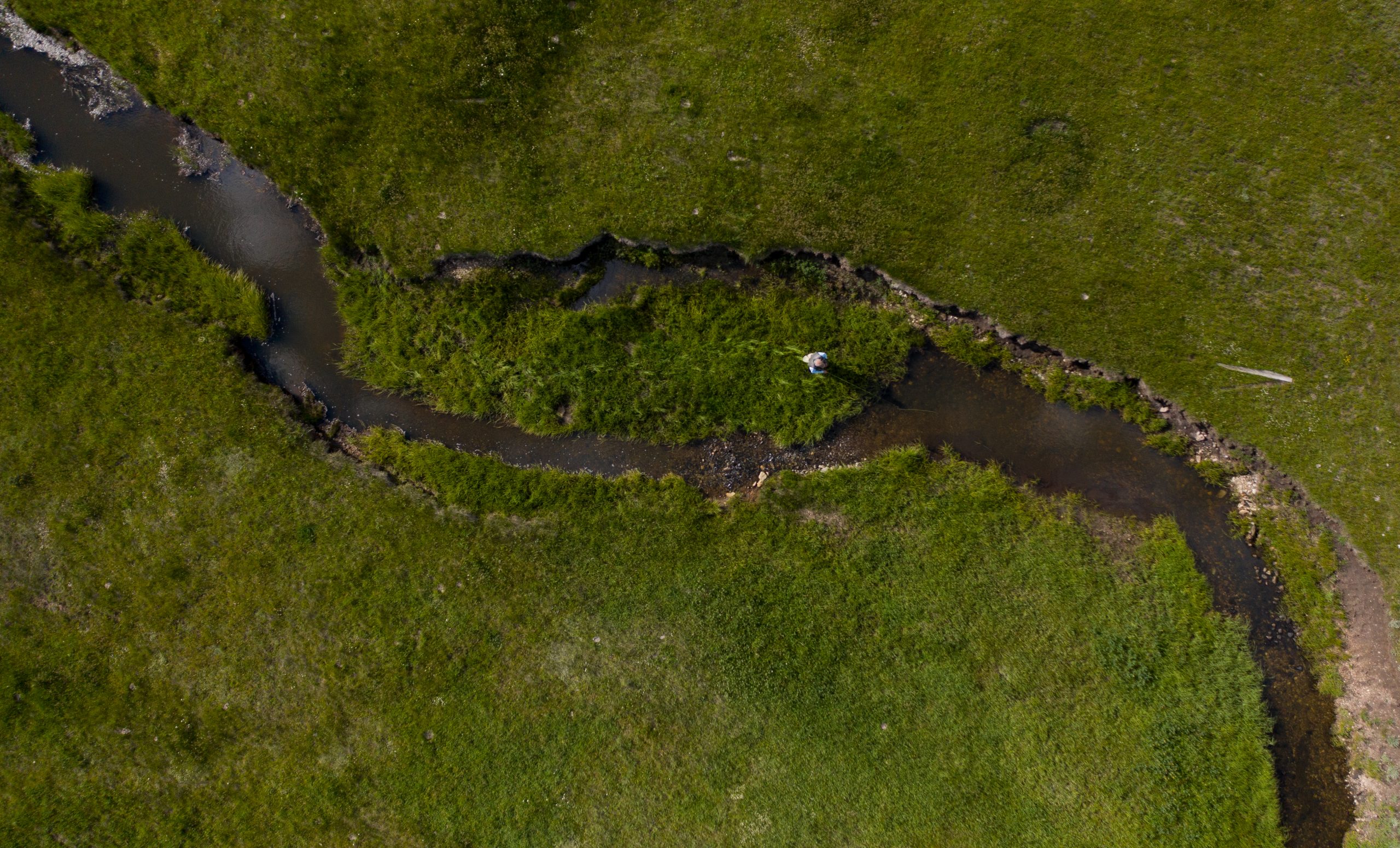
Rio Grande Cutthroat hold in the smallest, coldest water in this system. They sit in plunge pools below short waterfalls, under cut banks, in the slack pocket behind a single boulder in a riffle. Habitat fragmentation, hybridization with non-native rainbow and Yellowstone cutthroat, and warming summer flows have shrunk their range to roughly 10 to 12 percent of historical territory. Every spawning population that still holds is a small miracle of cold water, stream connectivity, and the absence of non-native competition.
What an angler can do, on any given afternoon, is straightforward. Pinch barbs. Keep the fish wet during a photo and a release. Hold it facing into the current until it kicks away on its own. Walk softly across shallow gravels. Trampled redds do not recover in a season.
A closing word from the chapter
The Truchas Chapter of Trout Unlimited works year-round on the watersheds that feed this river. With more than 400 local members, we log volunteer hours on barrier projects, in-stream habitat structures, Trout in the Classroom in regional schools, and partnerships with River Source, the Santa Fe Watershed Association, and shops like The Reel Life and Taos Fly Shop. The Pecos Wilderness is one of the reasons that work matters. It is what an undammed, lightly managed, native-trout watershed looks like when given room to be itself.
If you fish the upper Pecos this summer, fish it lightly. Take a photo, slip the fly, leave the fish. Pack out more than you packed in. And when the trail home gets long, remember the line on the chapter’s door: it all starts with you. Northern New Mexico’s cold-water fisheries are a living, shared resource for everyone downstream, and we are glad to share them with you.
