Some of our members, not to mention the general public, wonder why we expend so much effort on Rio Grande Cutthroat Trout (RGCT) protection and restoration. One reason is that it’s part of Trout Unlimited’s mission, “to conserve, protect, and restore North America’s coldwater fisheries and their watersheds”, and judging from the website home page, TU national seems to be adding “reconnect” (as we are doing on the Costilla), or featuring it as part of “restore”. Protecting and restoring indigenous or “native” trout and salmon populations has been a primary concern of TU since its inception. But why is spending so much effort on indigenous fish, rather than just working on habitat and catching more fish, important? That’s more complicated, and some of the reasons may seem personal, romantic, sentimental, even metaphysical, and maybe they are, but I’ll give it a shot.
First, a little historical perspective seems in order. RGCT have been in New Mexico at least since the last ice age, descendants of Colorado River Cutthroat that made it across the continental divide in Colorado, probably due to ice dams or landslides that altered the flow of headwater streams. Somewhere they crossed the Sangre de Cristo Mountains into the Canadian River drainage, and somehow they also entered the Pecos watershed, where they became the first true trout seen in the New World by Europeans when Coronado visited Pecos Pueblo in 1541.
My point here is that they didn’t occupy virtually every tributary of the Rio Grande, Canadian, and Pecos Rivers from southern Colorado to southern New Mexico and probably west Texas by being sissies. New Mexico has always been a tough place to live, with alternating flood, drought, heat, cold, muddy runoff, stretches of streams drying up in the summer, and wild diurnal fluctuations of water temperatures, and they are uniquely adapted to their habitat. I really don’t know of any evidence to show that their replacement by other species of trout has anything to do with changes in water temperature or chemistry, as is often implied. My experience has been that they are as tolerant of these factors as are other trout. I’ve had them smack my fly with water temperatures around seventy degrees, and swim off unfazed when released.
RGCT were here to meet the first human arrivals, and provided food for them for centuries. However, they survived by learning to eat anything that came by, mostly invertebrates, and when Europeans arrived with steel hooks and horsehair leaders (replaced by silkworm gut in the 19th century), things took a turn for the worse. The same unhesitating strikes at anything suggesting edibility that had sustained them for millennia became a liability, and by the late 1800’s the accessible populations were depleted and fragmented, prompting the stocking of exotic brown, rainbow, and brook trout, which were easier to raise in a hatchery and satisfy the public’s desire to catch and eat fish.
However, browns and brookies feed on RGCT fry, and RGCT don’t return the favor, probably because they didn’t evolve as fish eaters. Brook trout overpopulate, and even when stunted by this overpopulation, are still predacious on RGCT eggs and fry. But the biggest threat proved to be rainbow trout, closely enough related to interbreed. When this happens, the rainbow traits predominate. This was common knowledge when I first read it in the 1950’s, and has been substantiated many times since. There are instances where a token rainbow stocking has produced a stable ratio of hybridization, but if there is any continuing ingression of rainbows, it is extremely rare to see significant cutthroat traits after a few generations.
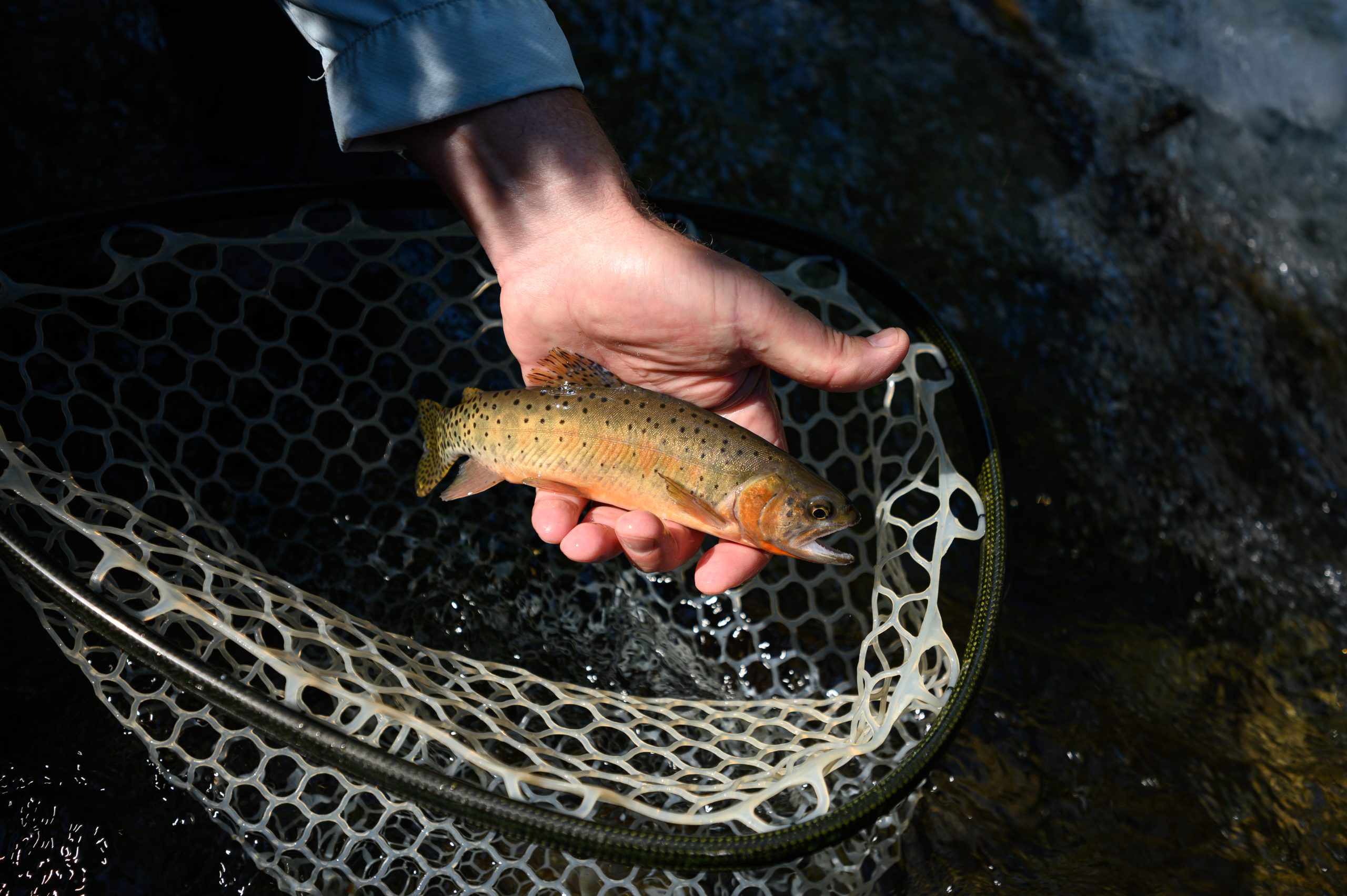
I have witnessed this phenomenon in my own lifetime, and can demonstrate the gradient in physical appearance now in a stretch of stream less than two miles in length where I don’t expect to see anything resembling a real RGCT in a few more years. All the habitat and watershed protection in the world will not protect our “native” trout from extinction without permanently excluding exotic trout and char species from their habitat. Had barriers been placed and stocking of exotic species above those barriers curtailed even 50 years ago, when I first started fishing for cutthroat, they would still be merely very difficult to find, as opposed to nearly impossible as they are now.
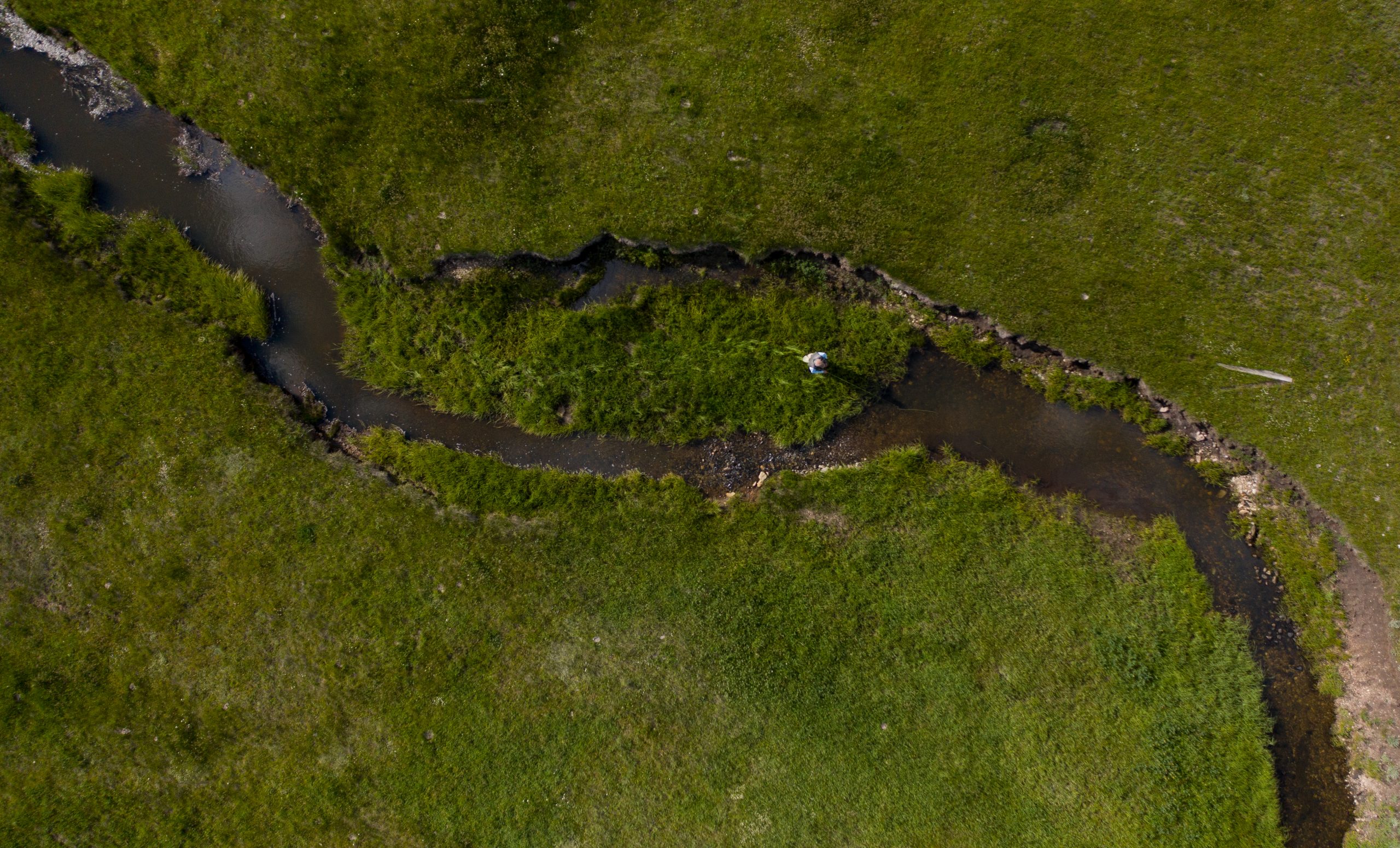
But that didn’t happen very often, and now RGCT are restricted to the usually stated “less than 10 percent of their original distribution”, which really doesn’t begin to define the problem. That “10 percent” is in linear feet of stream, not water volume, and is composed of various isolated headwaters that one can jump across, with some populations only a few hundred fish. Virtually all of these populations are genetically isolated from one another. Any little fire with toxic ash flow can wipe out one of these populations, and if exotics gain access to these waters, there go thousands of years of adaptation, as well as the opportunity to catch and release a fish that is a joy to behold.
It is true that cutthroat trout are generally easier to catch than other species of trout, especially browns, but no trout can stand up to modern tackle and liberal bag limits, witness the small size of brown trout in the public waters of the Pecos. Feisty opportunistic strikes are not necessarily a bad thing, especially when we advocate catch and release anyway. Any day spent on the stream is a good day, but if you can catch a few uniquely beautiful fish (you can catch browns and rainbows anywhere) in an idyllic setting, it becomes almost unbeatable.
Incidentally, barring the occasional freak long-lived brown that gets huge by devouring everything else in the stream, RGCT attain at least the same size as other species of trout in the same water. In my experience they often seem plumper, and they don’t overpopulate and become stunted as brook trout do.
So the short answer is that RGCT are in trouble and deserve our help. The Rio Costilla project is especially important because it is essentially the only place in the state where there is a chance to restore a “metapopulation” of cutthroat, where fish can migrate naturally between streams and have meaningful exchange of genetic material. The Alamitos barrier project is important because it will protect a large breeding population without having to fight the political battle of piscicide use. It’s a real shame that a person can be born, raised, and spend a lifetime fishing in New Mexico and never see his/her state fish without making a dedicated, boot leather–chewing effort to do so, as is now essentially the case, and we are doing what we can to change this.
– Arnold Atkins