MeatEater Podcast – Episode 817
In Episode 817 of the MeatEater Podcast, Senator Martin Heinrich (D–NM) joins host Steve Rinella for a wide-ranging discussion on public lands, wildlife conservation, and the future of hunting and fishing in the American West. As an avid hunter and angler—and longtime advocate for public access—Heinrich brings both policy expertise and lived outdoor experience to the conversation.
Throughout the episode, Heinrich speaks directly to issues that matter deeply to Trout Unlimited members: clean water, intact habitat, and responsible access to public lands.
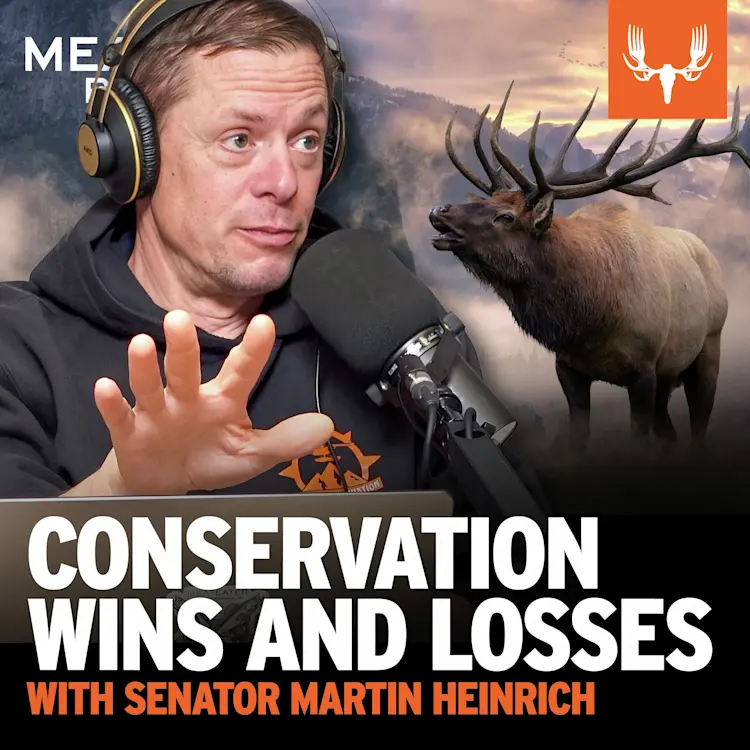
“The Roadless Rule was crafted through a huge public process. Chris Wood—who’s now the CEO of Trout Unlimited—was working for the Chief of the Forest Service at the time. That rule has been one of the most important tools we have for protecting critical wildlife and cold-water habitat.”
Senator Martin Heinrich (D–NM)
Key Conservation Takeaways
Corner Crossing & Responsible Access
Heinrich offers a clear explanation of recent federal court decisions affirming the legality of corner crossing—moving between public lands at shared corners. He emphasizes that the ruling reflects long-standing federal law and notes that its durability depends on ethical, low-impact behavior by hunters and anglers.
Stream Access and Clean Water in New Mexico
Drawing on New Mexico’s unique legal history, Heinrich explains how public stream access differs from “navigability” standards used elsewhere. He highlights recent court decisions reaffirming the public’s right to wade and fish streams—while underscoring the importance of protecting riparian habitat and respecting adjacent private land.
Roadless Areas and Wild Trout Habitat
Heinrich strongly defends the Roadless Rule, describing it as a flexible but essential tool for protecting headwaters, wild trout streams, and cold-water refugia. He warns that rolling back roadless protections would increase habitat fragmentation while doing little to address real forest management challenges.
Alaska, Wilderness, and Long-Term Thinking
The conversation turns to Alaska, where Heinrich voices concern about industrial threats to the Arctic National Wildlife Refuge and the Ambler Road mining corridor. He frames these debates in terms familiar to conservationists: intact ecosystems, subsistence fisheries, and the long-term value of leaving some places wild.
Energy Development Without Sacrificing Habitat
Heinrich advocates for a balanced approach to energy development—prioritizing private land and already-disturbed areas while avoiding unnecessary impacts to public lands, rivers, and wildlife corridors. He also discusses emerging nuclear technologies as a way to meet energy demand without sprawling habitat loss.
Wildlife Declines and the Role of Habitat
Late in the episode, Heinrich shares deep concern about declining mule deer populations across the West, echoing a broader conservation truth: habitat loss and fragmentation—not harvest alone—are the primary threats facing many species.
A Conservation Voice in Washington
What distinguishes Heinrich’s perspective is his consistent focus on stewardship. Whether discussing stream access, public lands, or wildlife management, he returns to the same principle: conservation succeeds when access, responsibility, and habitat protection move together.
For anglers, conservationists, and anyone invested in healthy rivers and resilient fisheries, this episode offers rare insight into how on-the-ground values translate into federal policy.
🎧 Listen to the full conversation:
MeatEater Podcast – Episode 817
https://www.themeateater.com/listen/meateater/ep-817