On September 19 and 20, New Mexico Trout Unlimited ran a volunteer weekend on Chihuahueños Creek, a remote headwater stream in the Jemez Mountains of the Santa Fe National Forest that still holds native Rio Grande cutthroat trout. The job was beaver dam analogs. Nine of us spent a rainy Saturday in the creek, and I came home thinking it was one of the better weekends I have had in the woods.
The weekend was coordinated and run by Juliet Smith, TU’s Northern New Mexico Project Manager, and Saba Ijadi, TU’s New Mexico Policy and Engagement Manager. The rest of us were a mix of Truchas Chapter members, a Bosque Chapter member, a prospective member who lives in the Jemez area, and one young volunteer. Small crew, good crew.
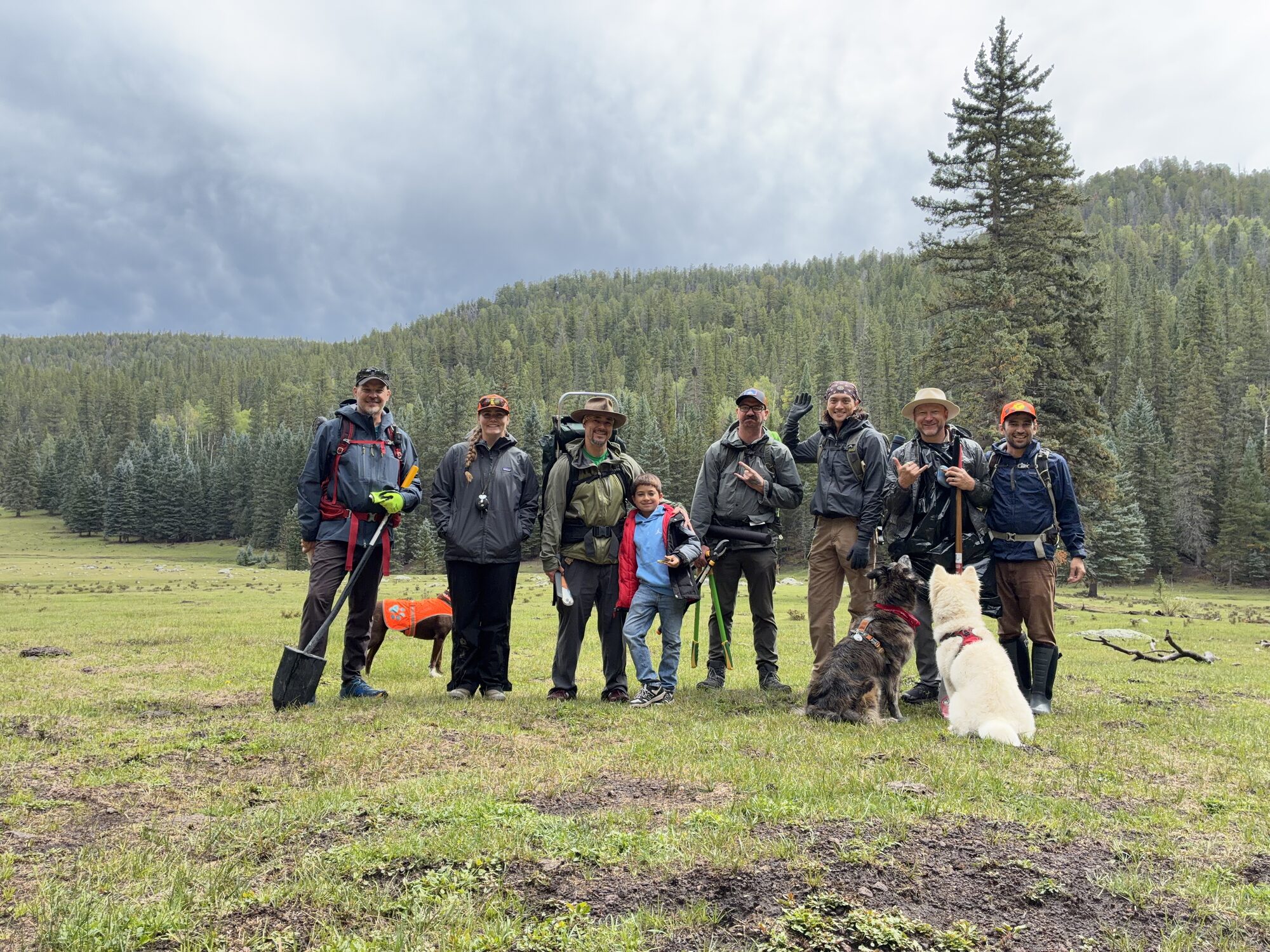
Saturday: a crew of humans pretending to be beavers
We drove up early Saturday, rendezvoused in Youngsville, and caravanned out to the campsite. Tents up, gear sorted, then down to the creek.
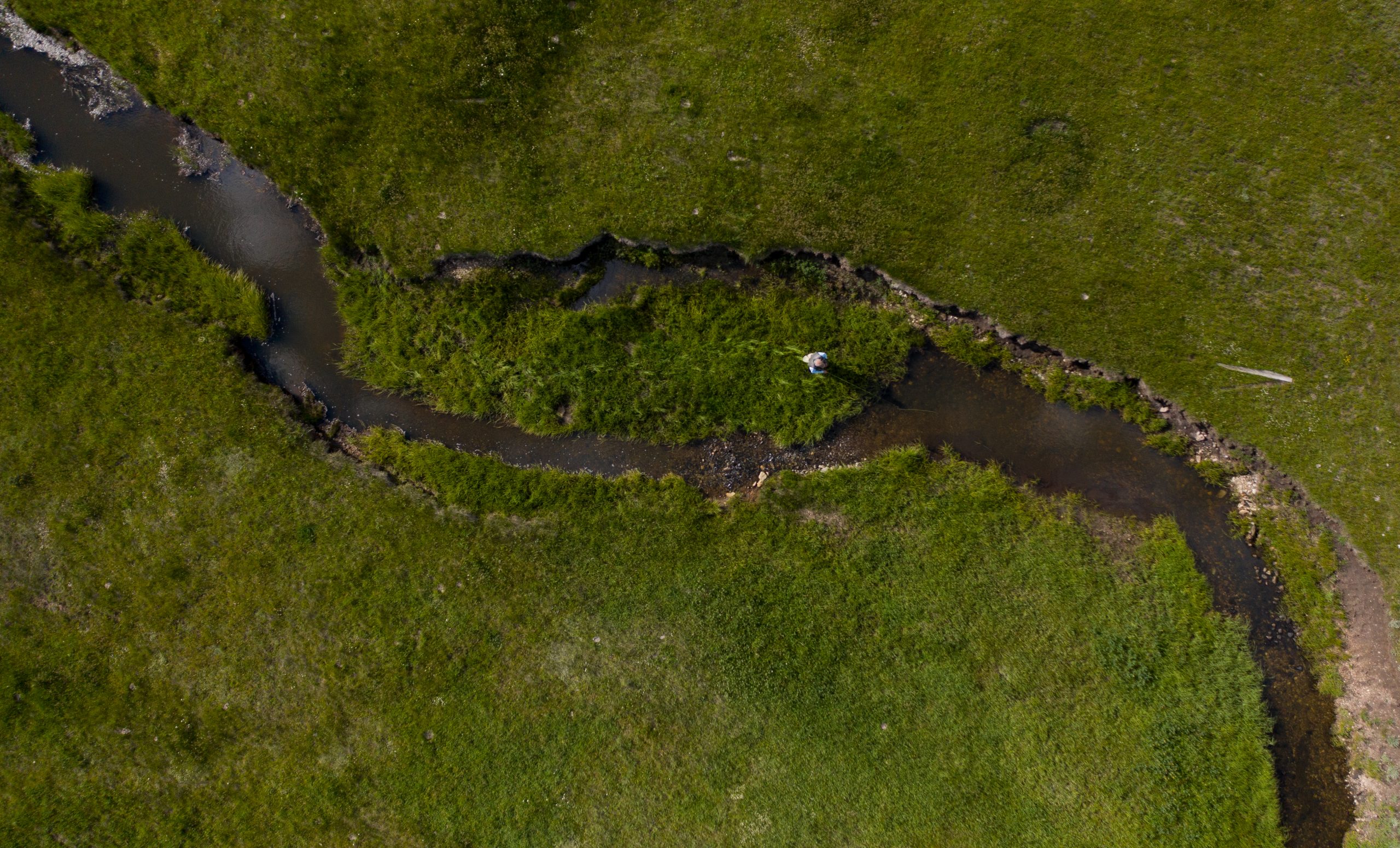
It rained on us off and on all day. Absolutely rainy, and absolutely beautiful. I recall bewilderment at how swollen and pregnant the upper area was with water. We split into groups and divvied up the tasks: some of us collecting mud and sod plugs, some cutting conifer boughs, some cutting larger green logs, and everyone taking turns placing the pieces in the creek in a particular order to build a dam. Logs and boughs woven across the channel first, then the mud and sod worked in to seal it.
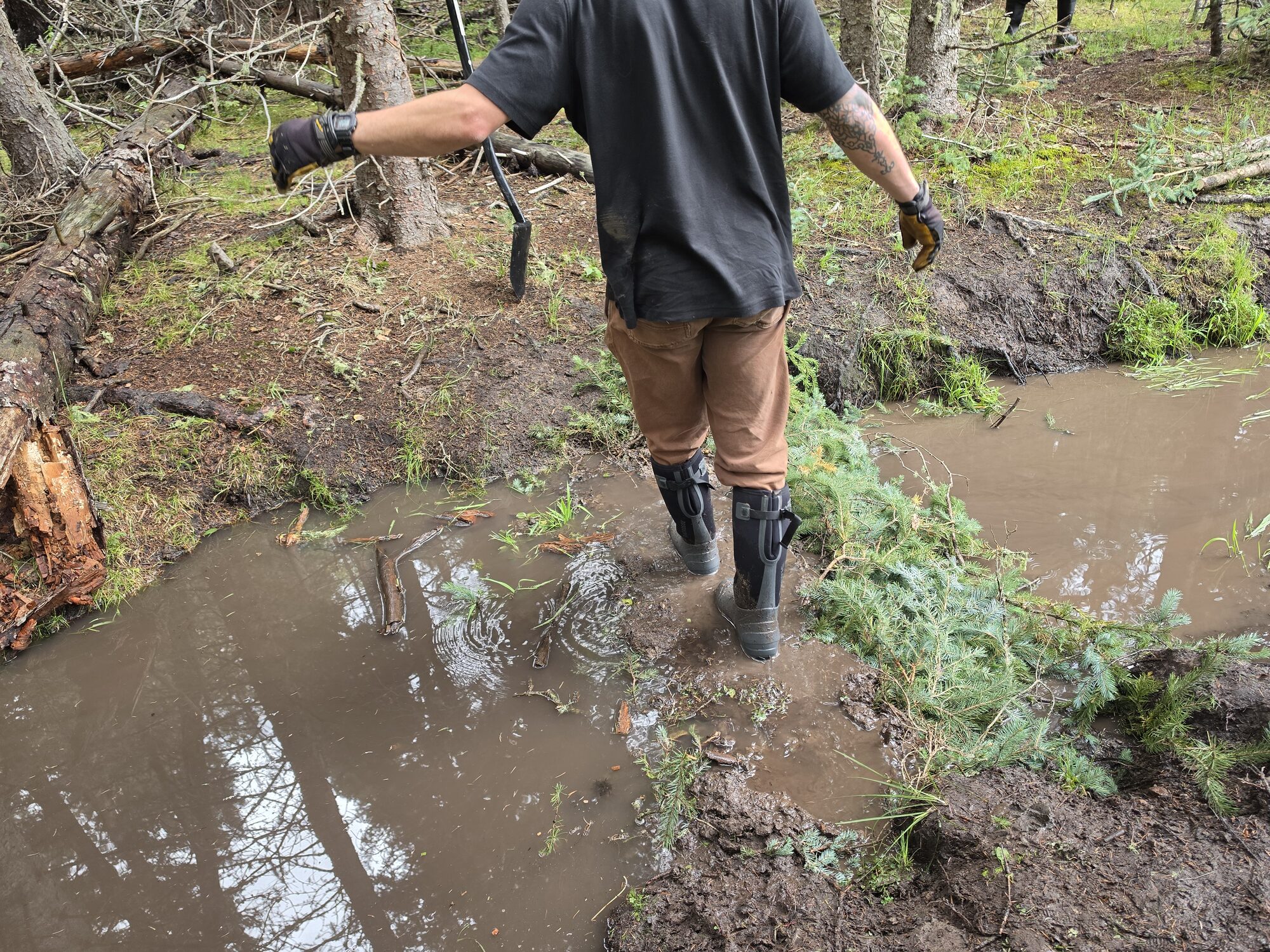
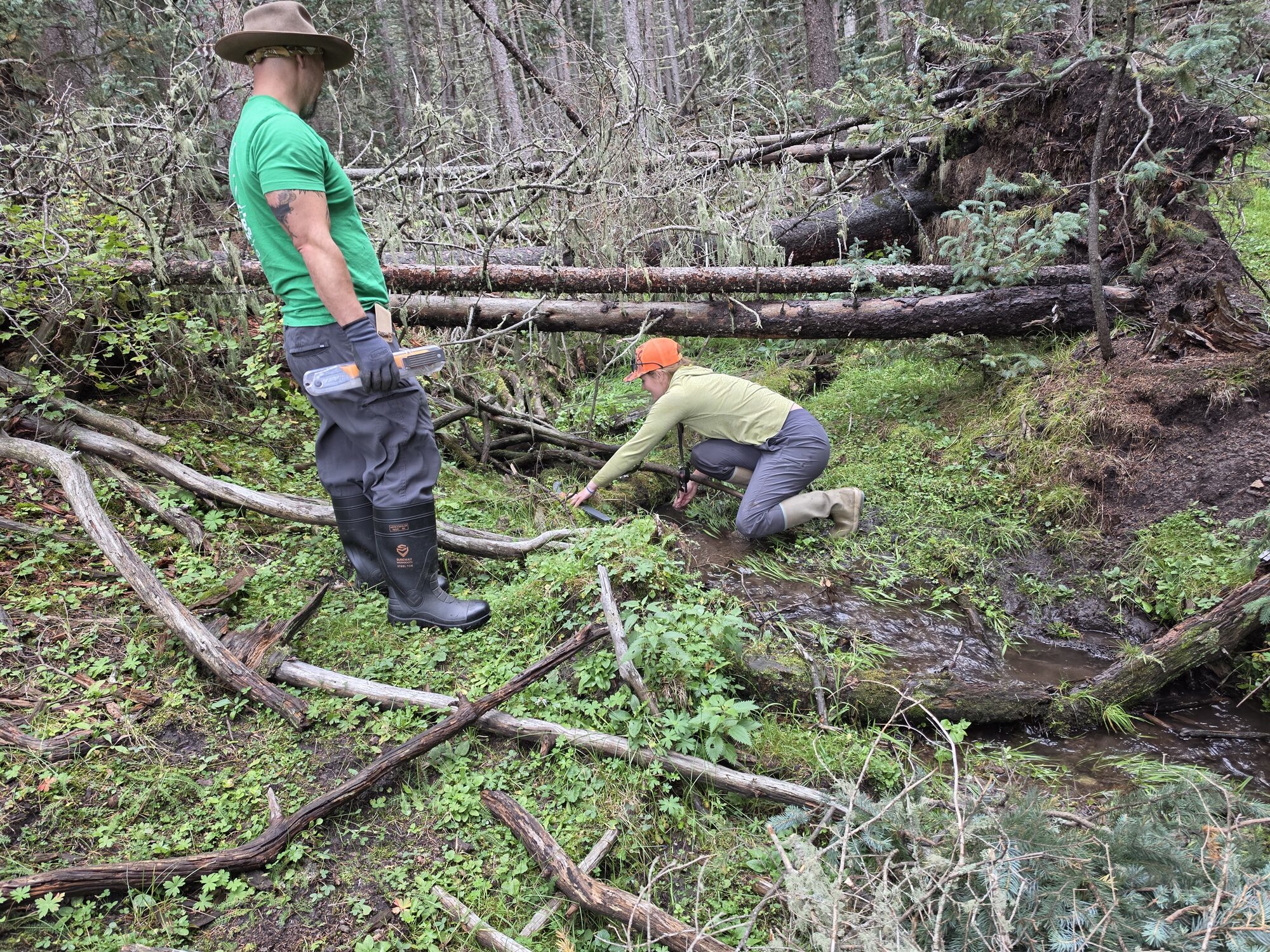
You see it work immediately. That is the part I did not expect. Within minutes of sealing a structure, water starts backing up and pooling behind it. By the time we moved on to the next one there was a real pool sitting where there had been a fast, shallow trickle.
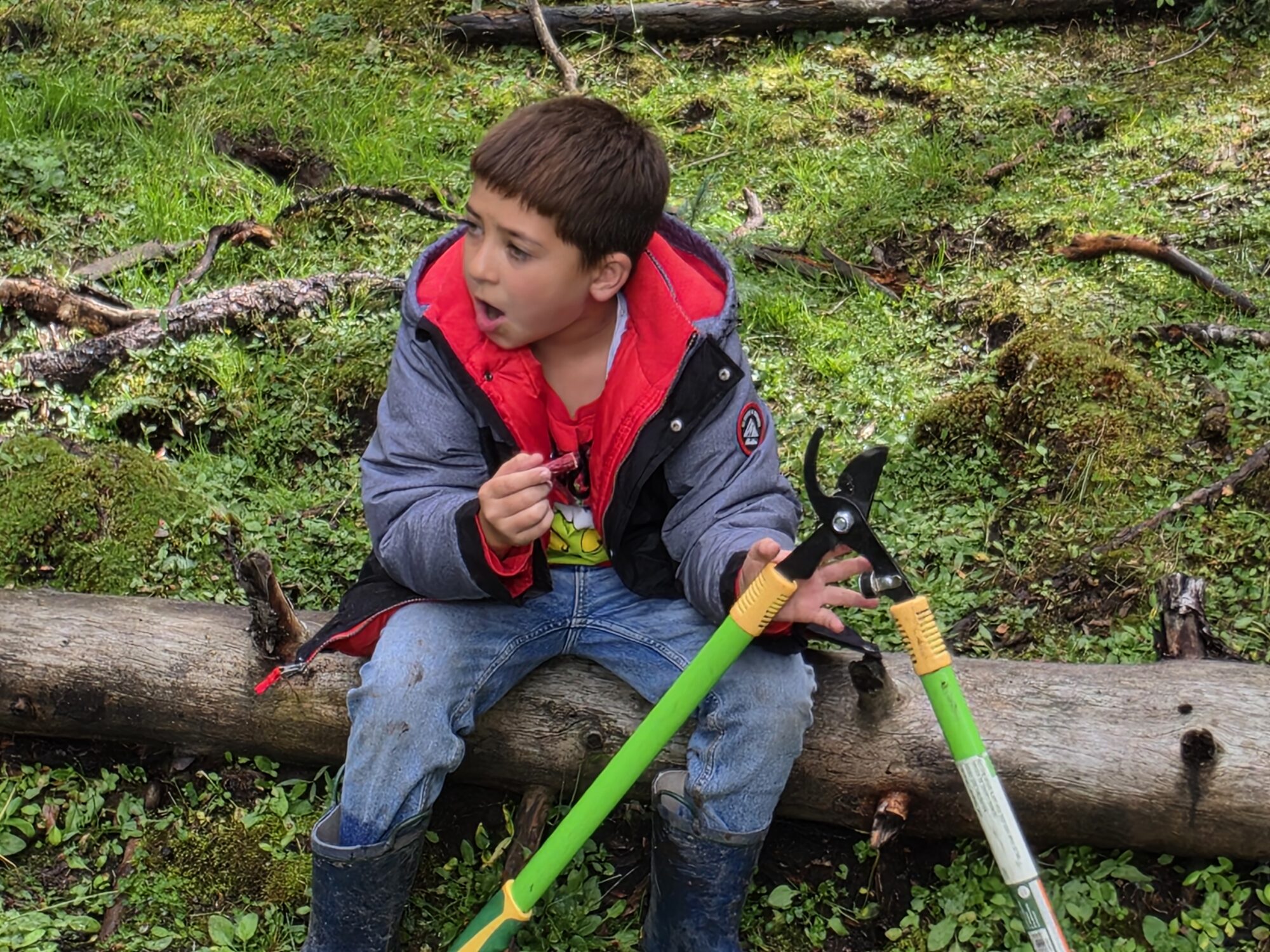
What is a beaver dam analog?
A beaver dam analog (BDA) is exactly what the name says: a hand-built imitation of a beaver dam, made from natural material already on site. Boughs, willow, and green logs woven across the channel, then sealed with mud, sod, and sediment so the structure actually ponds water. No machinery, no concrete. Just people, hand tools, and whatever the valley gives you.
BDAs are one tool in what practitioners call low-tech process-based restoration, or LTPBR. The idea is not to engineer the creek into a fixed shape. It is to restart the natural processes that used to keep the valley wet, and then let the water do the work. Here in New Mexico that tradition runs through Bill Zeedyk’s rock structures (one-rock dams, Zuni bowls, induced meandering) and his book Let the Water Do the Work.
What the structures do, in plain terms:
- Slow and spread the water. Chihuahueños has become overly wide and shallow in places, and the water races down it. Ponding it out slows the flow and pushes it across the meadow instead of down a chute.
- Catch sediment. Still water drops its load, which over time raises the streambed back toward the floodplain it got cut off from.
- Raise the water table. A wetter meadow holds moisture later into a dry summer.
- Make and cool trout habitat. Pools, shade, cooler summer temperatures.
- Add some fire resilience. A wet meadow with a high water table behaves differently in a fire year than a dry one. That is the widely shared rationale for this work rather than a number anyone measured on this creek, so take it as a qualitative benefit.
- Invite the actual beavers back. The long game is conditions good enough that beaver move in and take over maintenance.
And yes, there is something genuinely funny about a group of adults driving deep into the Jemez to spend a day pretending to be beavers. It amused me the entire time. It also worked.
Green chile stew and a propane fire pit
Once the work was done we hiked back up to the cars and drove to camp, where the TU team had a batch of green chile stew cooking. After a full day of getting rained on, hot and spicy was the correct answer to every question.
Fire restrictions were in effect, so no traditional campfire. I brought a propane fire pit instead, and we sat around it well into the evening eating, telling stories, and talking about the day’s work. It is a good feeling to be tired from something that obviously mattered.
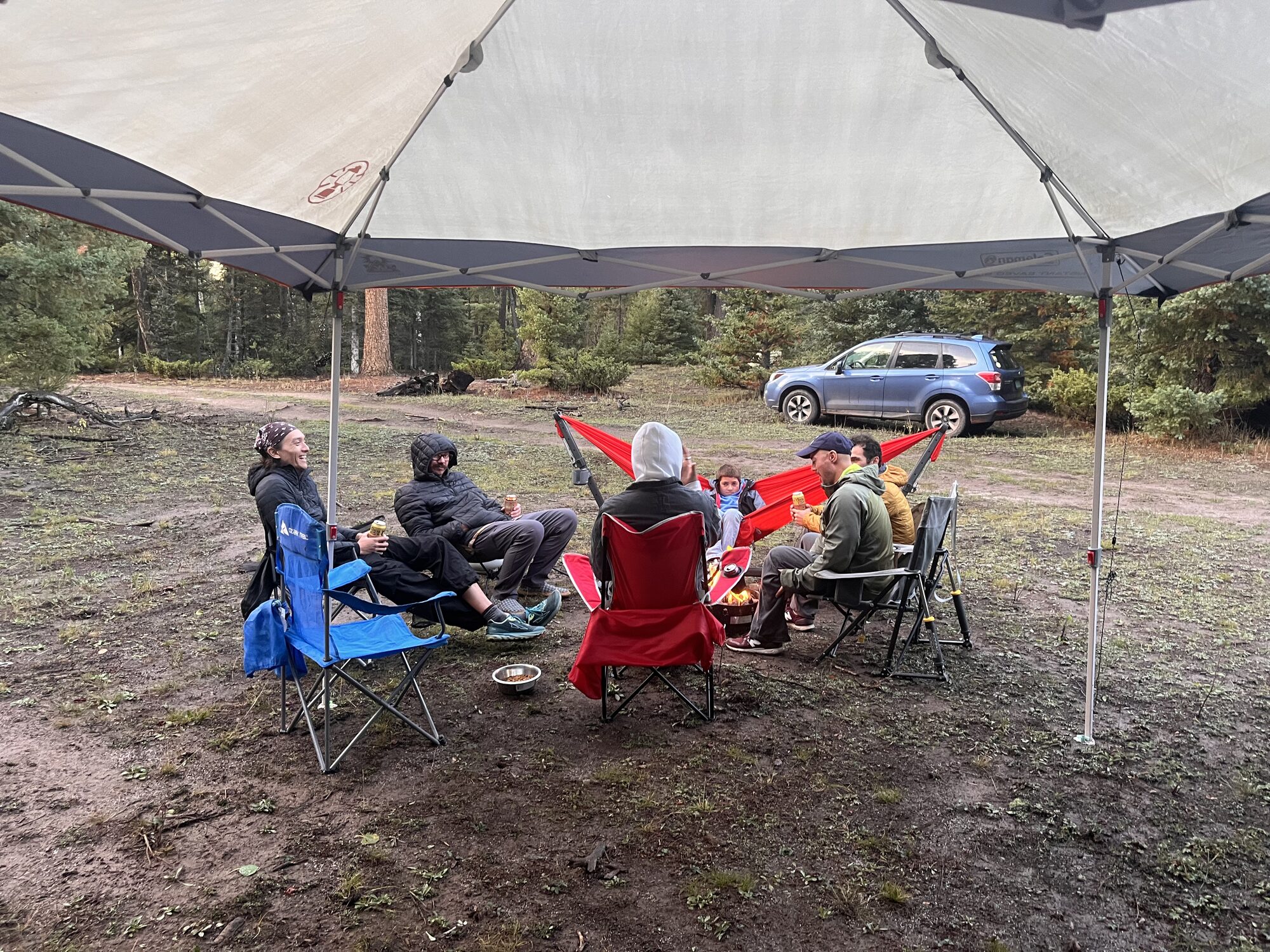
Sunday morning the team had coffee going and made what I will say plainly was the best homemade breakfast burrito anyone has ever handed me. Homemade beans somebody brought from home, big slabs of fresh roasted green chile, good eggs. I eat a lot of breakfast burritos. This one set the bar.
Sunday: a tour of the whole project
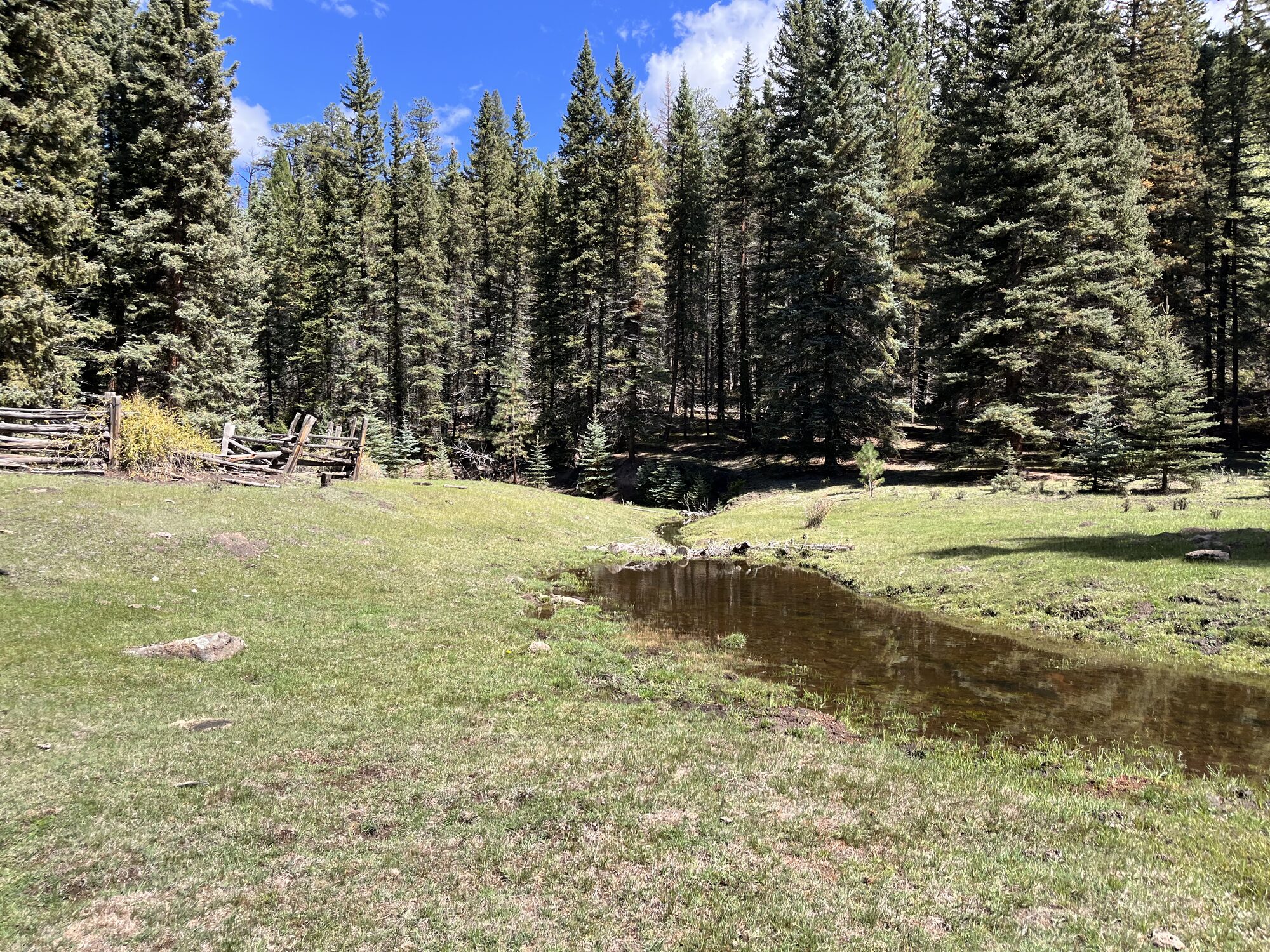
Sunday was for seeing the bigger picture. We dropped a car at the bottom, met at the top, and walked the length of the project while Juliet talked us through it.
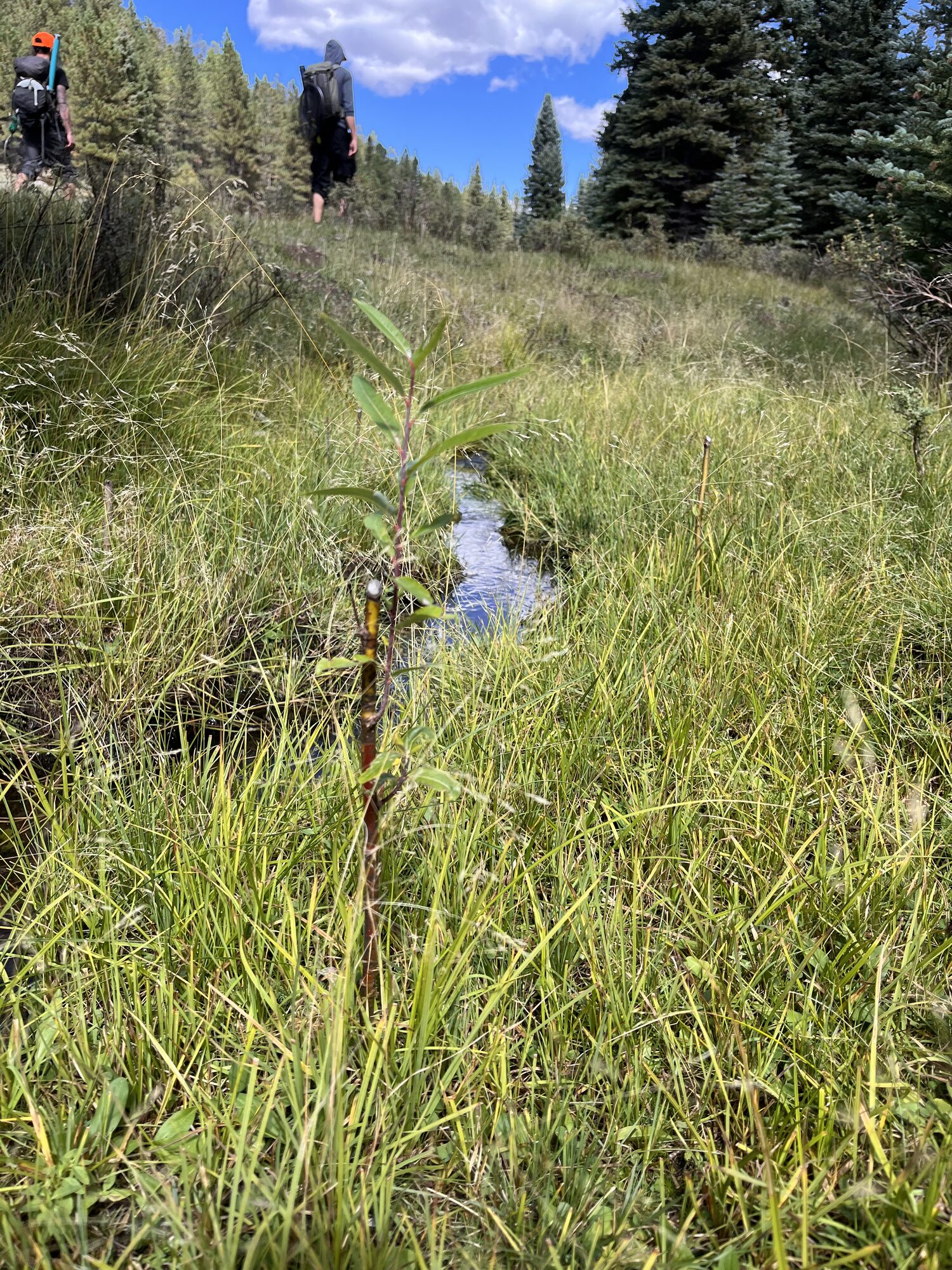
Three kinds of work are going on in this drainage. The BDAs and log structures in the channel are one. Willow planting is the second: willows firm up the banks against erosion, shade the water, host the insects trout eat, and eventually supply building material for beaver. That last part stuck with me. Juliet pointed out that there is essentially nothing in this valley for a beaver to eat right now (they do not eat pine), so planting willow is a genuinely optimistic investment in beaver that have not arrived yet.
The third is exclosures, which are fenced stretches that keep cattle and big game like elk off the creek and away from the new willow. Cattle erode banks, muddy the water, and do the rest of what cattle do in a creek. The Santa Fe National Forest supplied the fencing here, with Forest hydrologist Kevin Carns providing oversight. Juliet also walked us through the engineering and planning behind the project, the paid crews who have done parts of the heavy work, and what previous volunteer trips accomplished.
That is where the weekend got personal for a couple of us. Our member and his son had been on the April trip, when five volunteers put roughly 1,000 willow cuttings in the ground along this same stretch. They got to stand there and show the rest of us the willows they planted, leafed out and doing their job. Daniel Gibson wrote up that April outing for us in Hard Work Paying Off on the Rito Chihuahueños, and it is worth reading alongside this.
And we got to fish
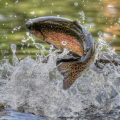
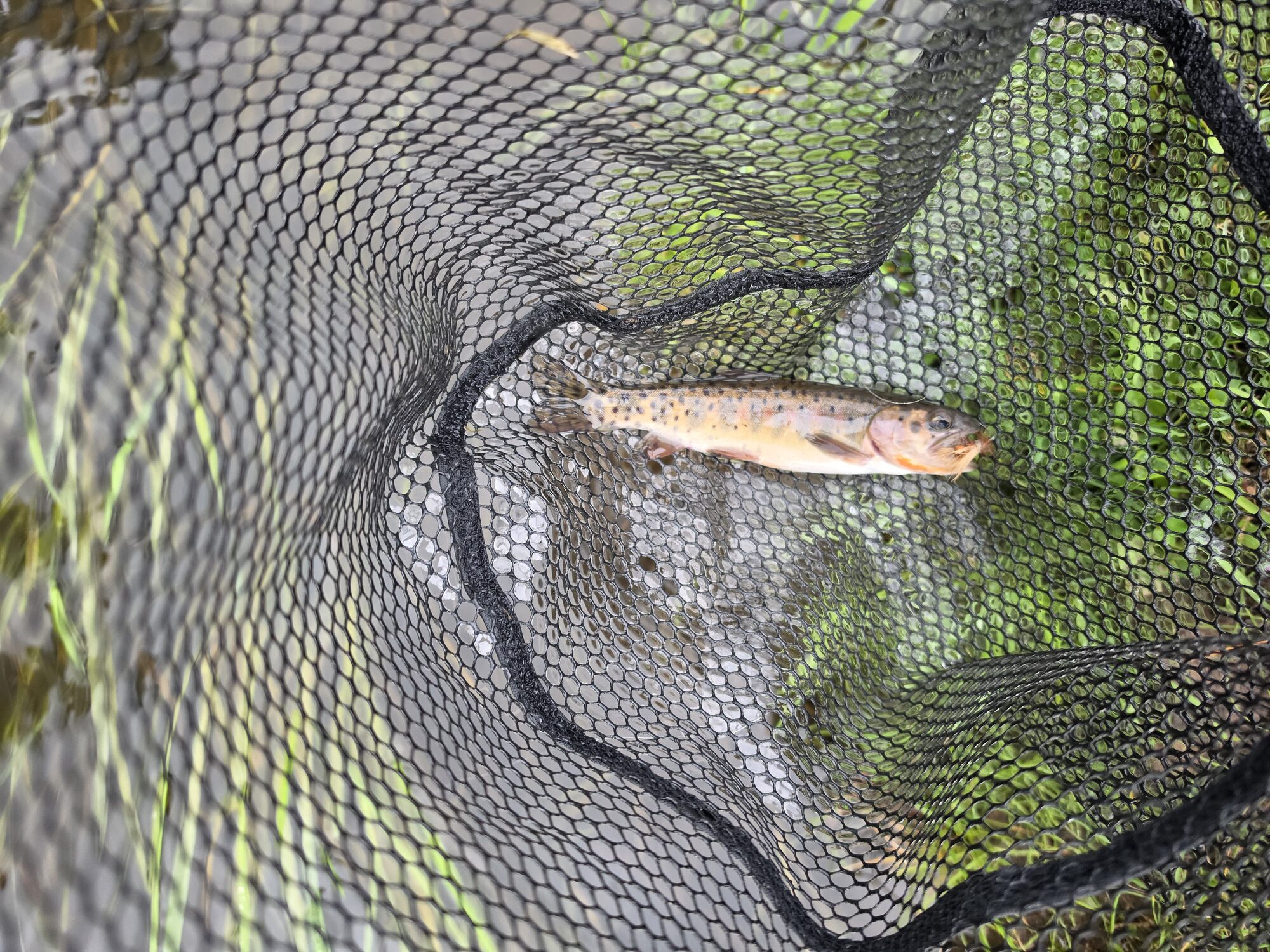
A few of us had brought rods, and Sunday morning we had the chance to fish for the population this whole effort exists to protect: wild Rio Grande cutthroat trout, in a headwater stream, in about as pure a form as the species comes. Genetically pure populations like this one survive mostly in isolated high creeks where nonnative trout cannot reach them, which is exactly what makes them worth this much trouble and exactly what makes them fragile.
They were beautiful and they were feisty. Catching one in water you spent the previous day rebuilding is a different experience than catching one anywhere else.
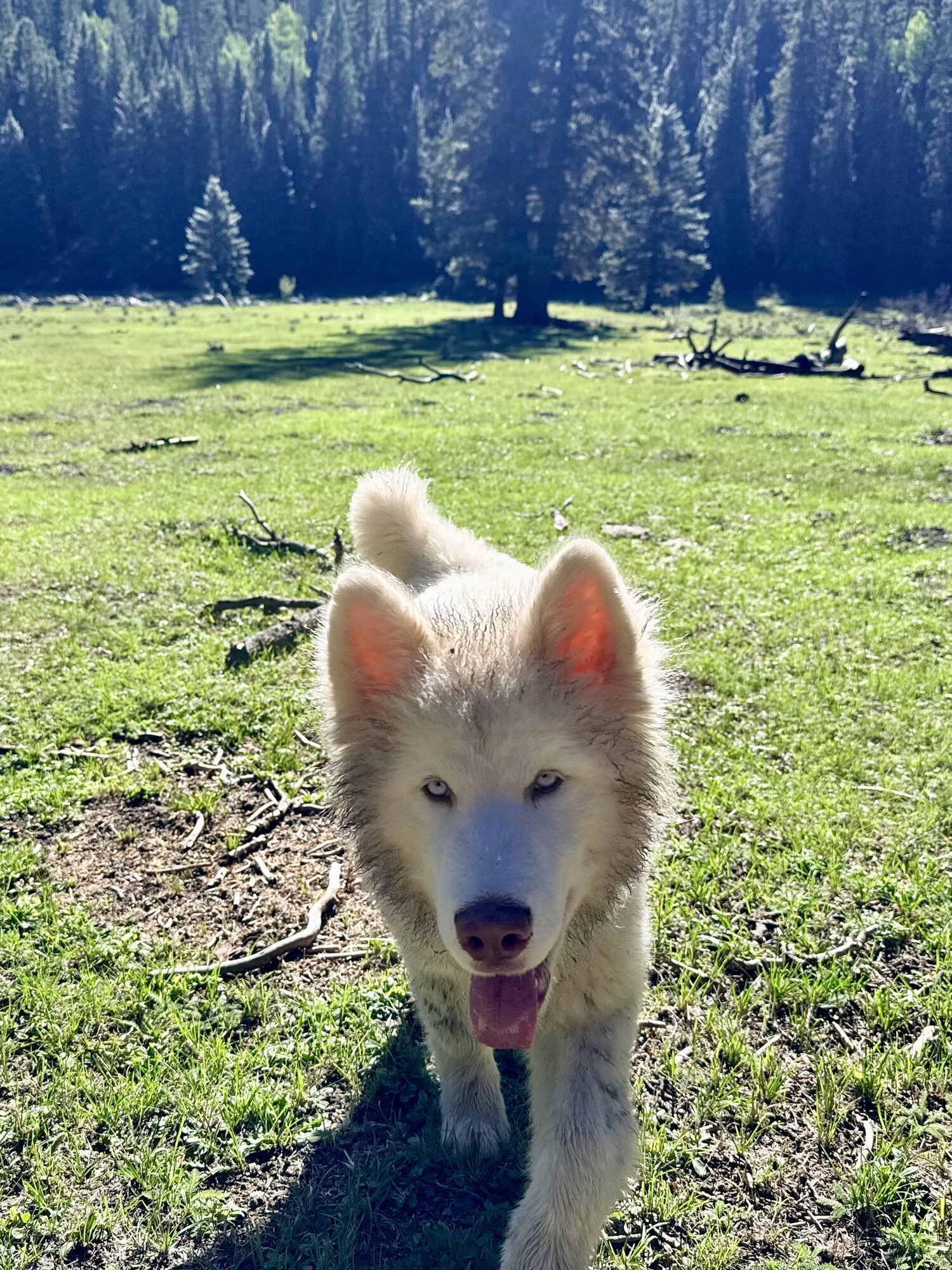
There were also three dogs, which improved everything. Juliet brought hers, Saba brought his, and I brought Loki, my husky puppy. They were a joy at camp and on the hikes, and Loki has never been happier than he was that weekend.
Come do this with us
We hiked out, broke camp, cleaned up, drove home, and traded photos the rest of the week.
Here is my pitch. The reason any of us are in the Truchas Chapter of Trout Unlimited is trout. We love to fish. Weekends like this one are how you pay that back into the ecosystems that make the fishing possible, and the work is not complicated. You need to be willing to get rained on, carry some mud, and follow instructions from people who know what they are doing. The stew and burritos are excellent.
Watch our events and volunteer listings for the next Chihuahueños trip, or get in touch and we will point you at whatever New Mexico TU has coming up. Chihuahueños Creek is one of the first cutthroat restoration projects Trout Unlimited took on in New Mexico, and it is still going because people keep showing up. It all starts with you.