From Indigenous peoples of Pecos Pueblo to 16th-century Spanish explorers and early 20th-century ranchers, people have fished the Pecos River for centuries. Today, anglers can access a carefully managed stretch of trout water inside Pecos National Historical Park, where fishing meets conservation and history in one unforgettable setting.
Fishing here isn’t just about landing trout — it’s about being part of a shared effort to protect native fish, habitat, and riparian ecosystems while enjoying a high-quality angling experience.
A Special Three-Mile River Corridor
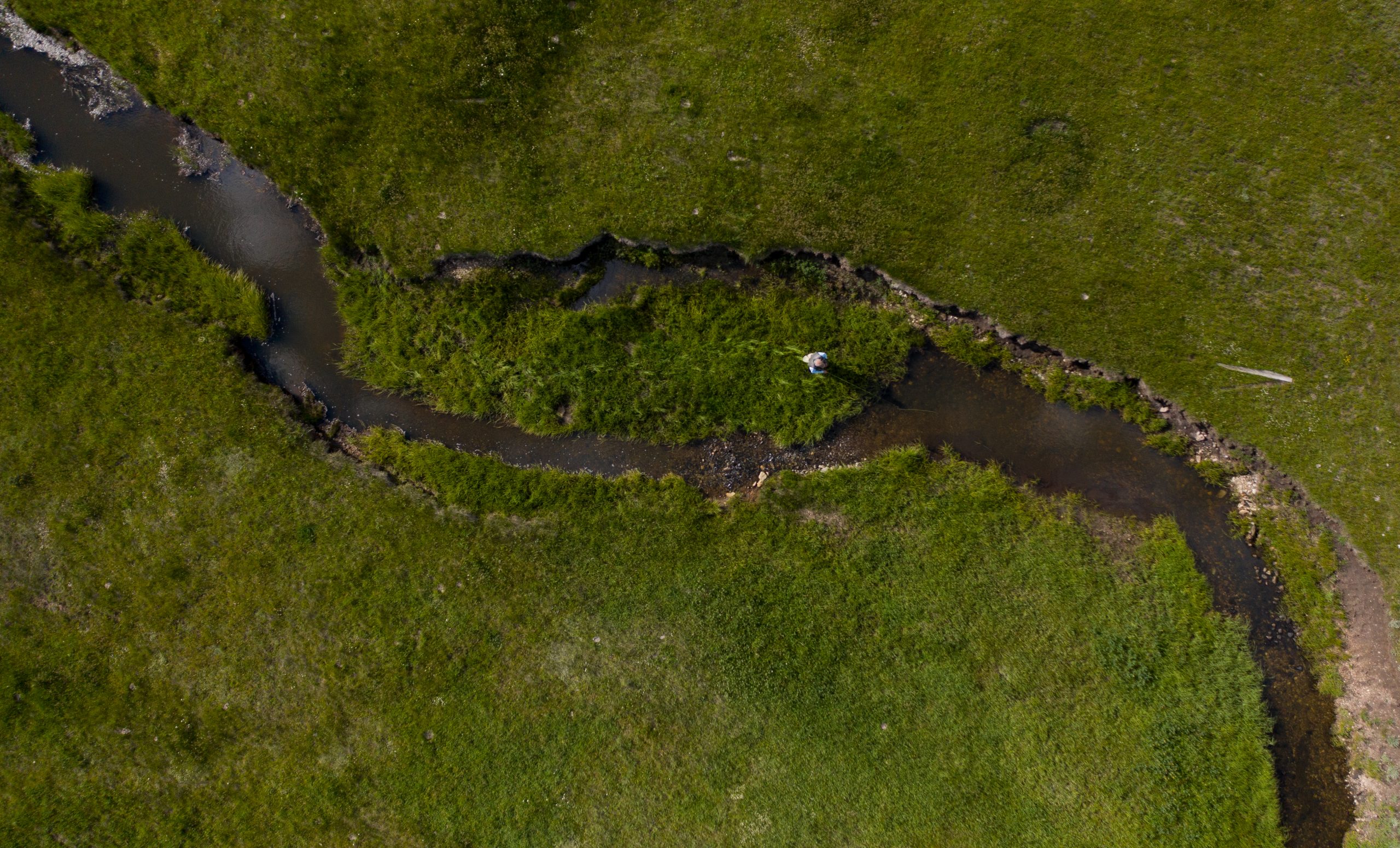
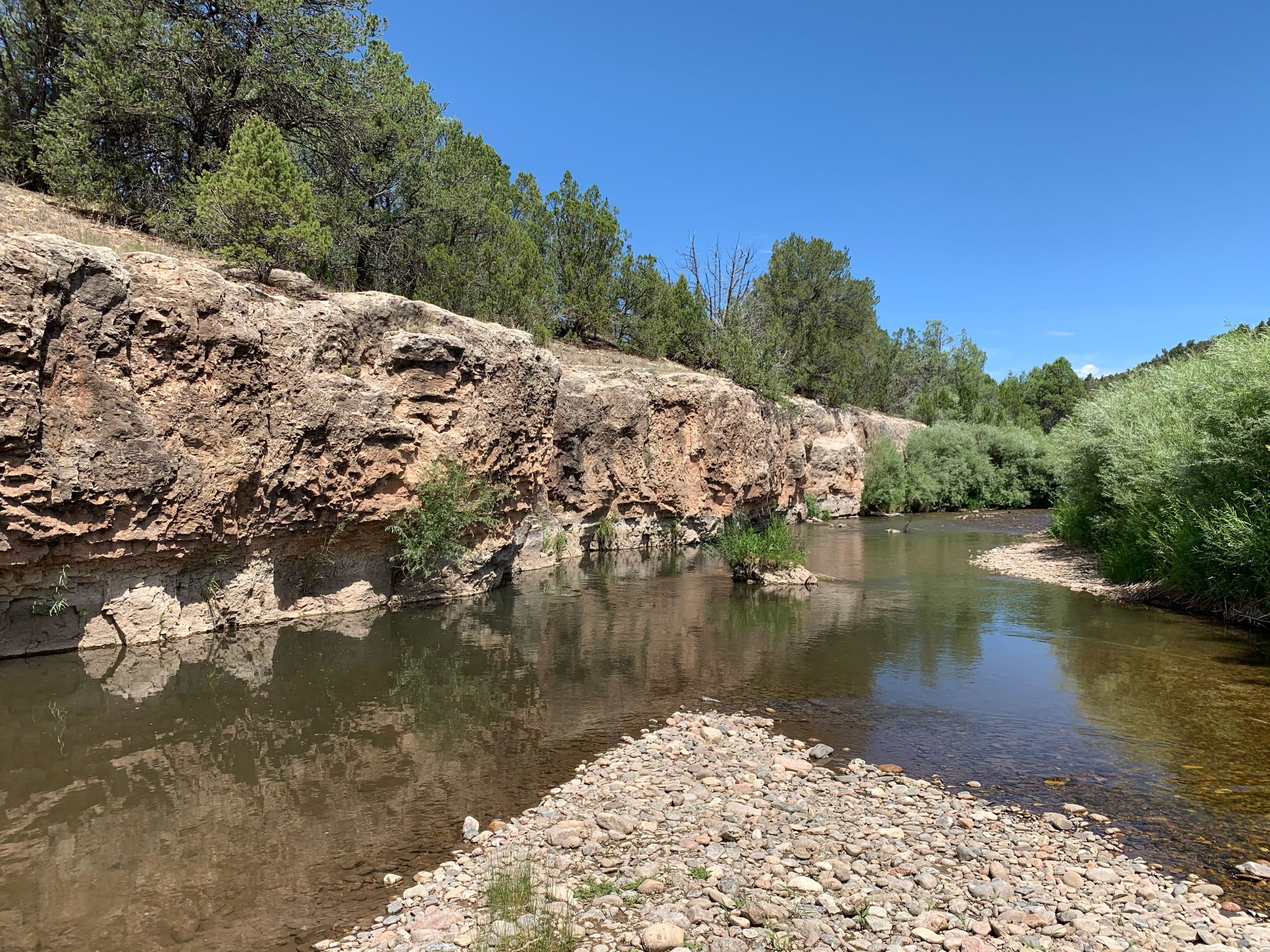
The Pecos River winds through roughly three miles of park land, divided into three fishing beats of about a mile each. These beats are clearly designated and available only by reservation — a system designed to limit pressure on the river and protect sensitive riparian vegetation.
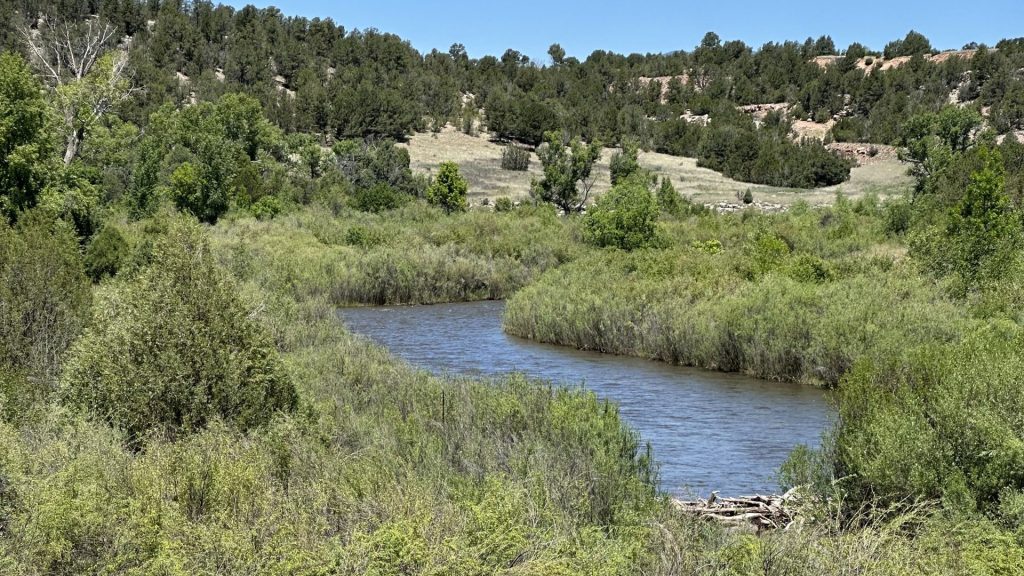
Beats 1 and 2 are easily accessed from the main visitor center parking area, while Beat 3 requires a longer walk (about 1¼ miles) down a ranch road to reach the river.
The water here includes a mix of riffles, runs, and deep pools, with abundant aquatic insects and healthy habitat for trout and other fish — creating productive and peaceful fly-fishing water close to Santa Fe.
Planning Your Trip: Reservations, Season & Check-In
Season & Schedule
The fishing season runs from July 1 through October 31. Fishing is permitted on Sunday, Monday, Thursday, Friday, and Saturday during this period.
Anglers may fish between 8:30 a.m. and 3:00 p.m. each day of the season, and reservations are required in advance.
Reservations
All fishing access is by reservation only. Reservations cost $1 per day and may be made up to 30 days in advance.
Each reservation covers a single beat for up to four people (fishing or not) for that day — groups cannot exceed four people under one reservation.
Check-In & License
Anglers must check in at the visitor center at the start of their day, where staff verify reservations, confirm fishing licenses, and provide directions and parking information.
A valid New Mexico fishing license is required for all anglers 12 and older and must be shown at check-in. Licenses are not sold on site, and Wi-Fi can be unreliable, so licenses should be secured before arriving.
At the end of the day, anglers must check out before the visitor center closes.
Fish Species & Conservation Focus
The Pecos River in this section supports both non-native trout and native fish species. Native fish include longnose dace, white suckers, and the Rio Grande chub.
While Rio Grande cutthroat trout historically inhabited the Pecos River watershed, they are not currently documented within park boundaries.
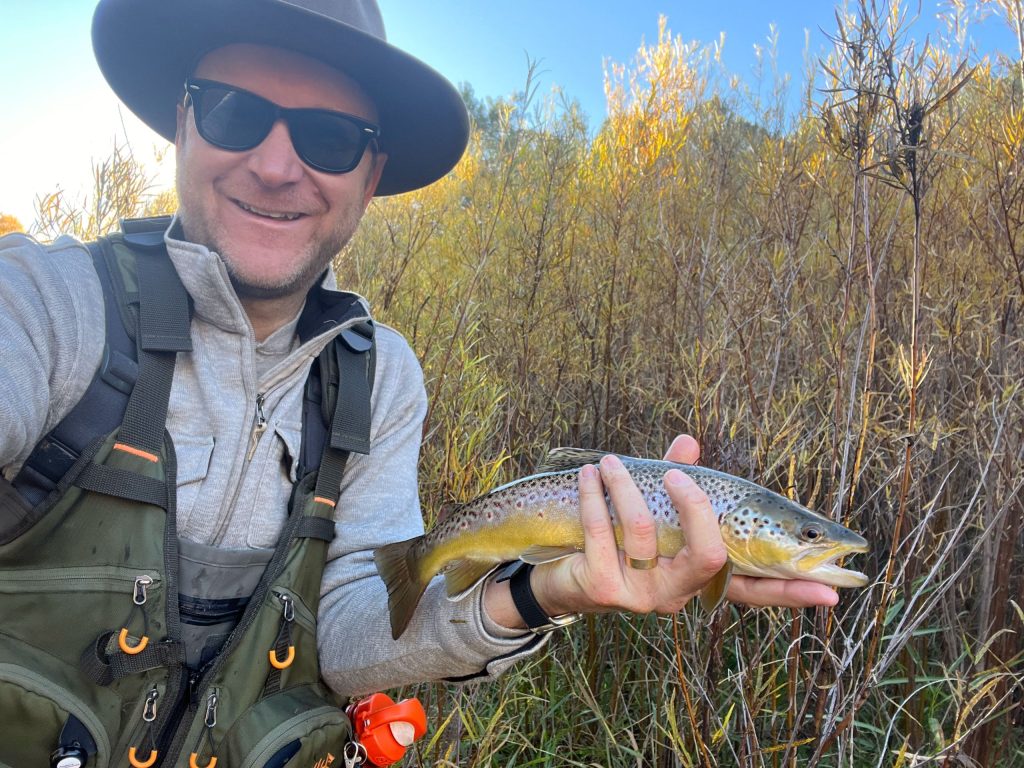
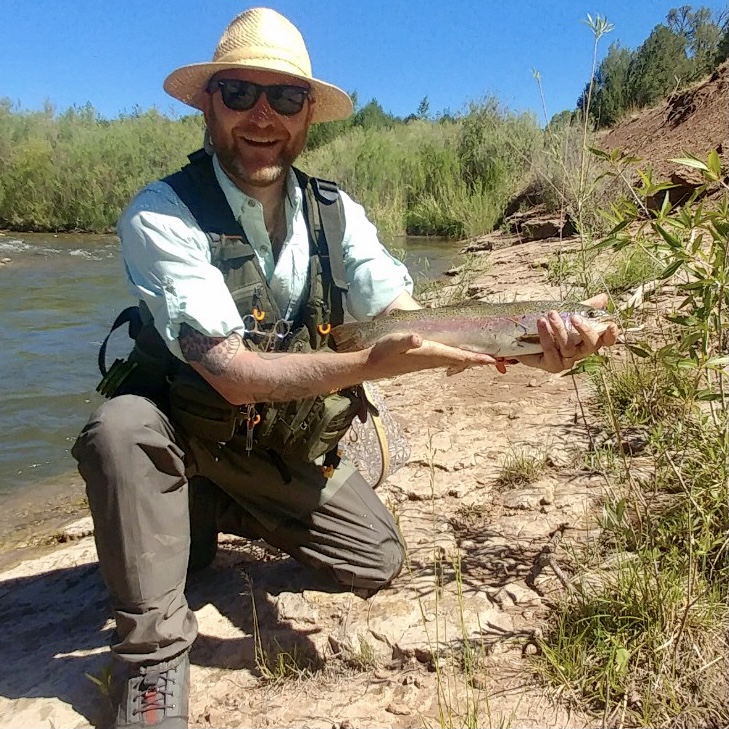
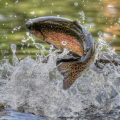
Today, brown trout and rainbow trout are the most common sportfish. Because non-native trout compete with and prey on native species, anglers are encouraged to remove brown and rainbow trout in accordance with state bag limits. All native fish must be immediately released, alive and unharmed.
This approach reflects a conservation-focused fishery — one that balances angling opportunity with the long-term health of native species.
Regulations You Must Know
Fishing at Pecos National Historical Park follows a combination of federal regulations, park-specific rules, and New Mexico state fishing laws, with federal rules taking precedence where conflicts occur.
Anglers are responsible for understanding and complying with all applicable regulations before fishing. Gear restrictions apply, including the use of artificial lures only, single-hook setups, and barbless hooks for flies.
Anglers are also strongly encouraged to clean and disinfect gear before and after fishing to prevent the spread of aquatic invasive species.
Safety & Stewardship on the River
River access is informal, and trails are not maintained. Anglers should be prepared for uneven terrain, thick vegetation, and changing conditions along the riverbank.
Weather in northern New Mexico can shift quickly, especially during monsoon season, when sudden storms may cause high flows or flash flooding. Staying alert to forecasts and river conditions is essential.
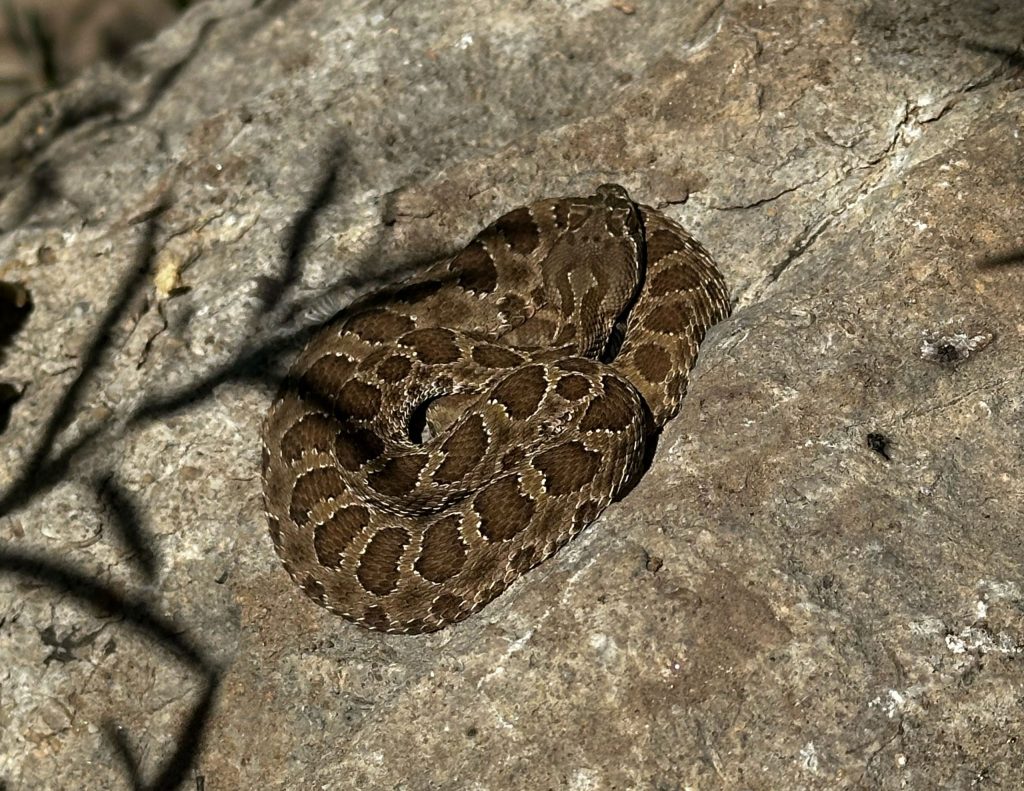
Wildlife is abundant in the Pecos River corridor, including rattlesnakes and black bears. Anglers should use caution in areas with limited visibility and always give wildlife space.
If planning to eat your catch, be sure to check current fish consumption advisories before doing so.
Why This Place Matters
Fishing the Pecos River at Pecos National Historical Park is about more than catching fish. It’s an opportunity to experience a thoughtfully managed fishery where conservation, history, and recreation are tightly woven together.
By limiting access, encouraging the removal of non-native trout, and protecting riparian habitat, the park works to ensure the Pecos River remains healthy and resilient for future generations.
When anglers understand the why behind the rules, they become active partners in conservation — helping protect coldwater resources while enjoying a uniquely meaningful day on the water.