


Fly fishing for trout is one of life’s great joys, connecting anglers to the beauty and tranquility of rivers and streams. However, as water temperatures rise, particularly during the heat of summer or prolonged droughts, fly fishing can become dangerous—even deadly—for trout populations.
Trout are cold-water fish, thriving best in water temperatures ranging from 45°F to 65°F. When temperatures approach and exceed 68°F, trout become stressed, making them highly vulnerable to illness, injury, and death. At these higher temperatures, the dissolved oxygen levels in the water drop significantly, impairing the trout’s ability to recover after being caught.
Catching trout in warm water exhausts them to the point that they often cannot revive after release. Even fish that appear healthy upon release can later succumb due to lingering stress and depleted oxygen.
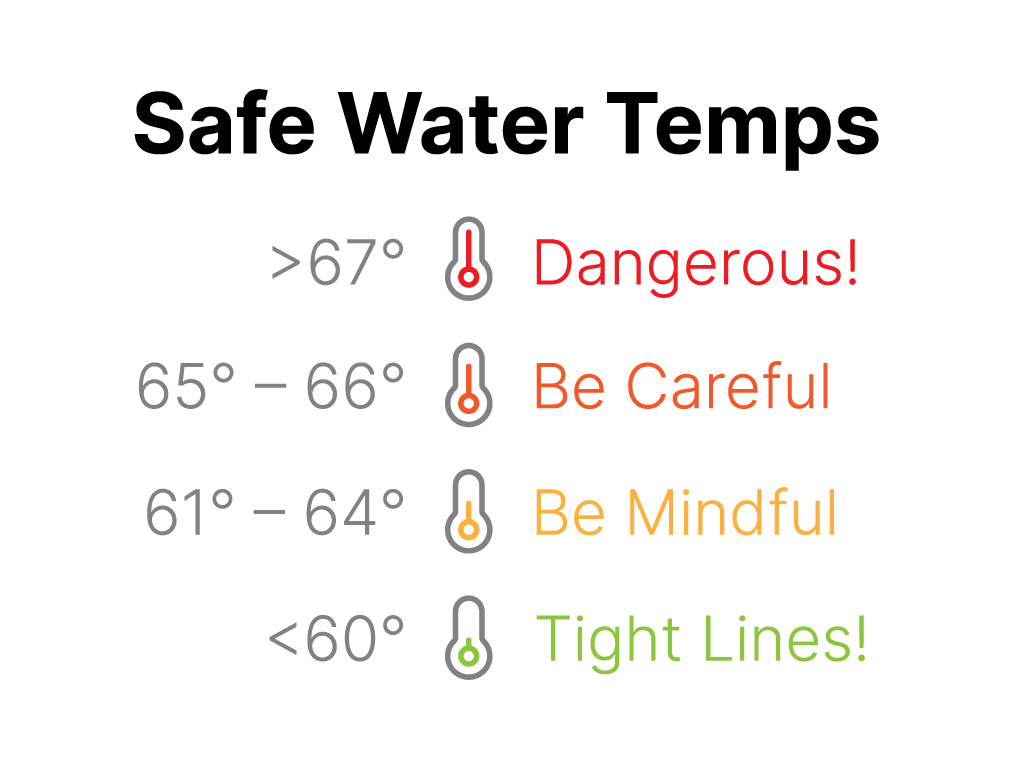
Anglers can help protect trout by:
- Carrying a thermometer to check water temperatures before fishing.
- Avoiding fishing altogether when water temperatures exceed 67°F.
- Fishing during cooler parts of the day, such as early morning or late evening.
- Seeking out higher elevation streams or shaded, cooler sections of rivers. In a low-water year the high country can run warm and stressed too, so check the temperature there rather than assuming elevation solves it.
When the streams are too warm, the fishing does not have to stop. Two options hold up through the hottest stretches:
- The San Juan River. Below Navajo Dam it runs as a tailwater, drawn from deep in the reservoir rather than off the warm surface, which keeps it cold and fishable straight through the summer.
- Alpine and high-country lakes. Elevation does the work here. Our mountain lakes hold cooler water well into the season and make for a very different day on the water.
Responsible angling practices during periods of elevated water temperatures are essential to ensuring healthy trout populations for generations to come. Let’s enjoy our rivers sustainably by knowing when to give the trout a break.
Tight lines!
– Patrick Iverson, Communications Chair